


 chargement...


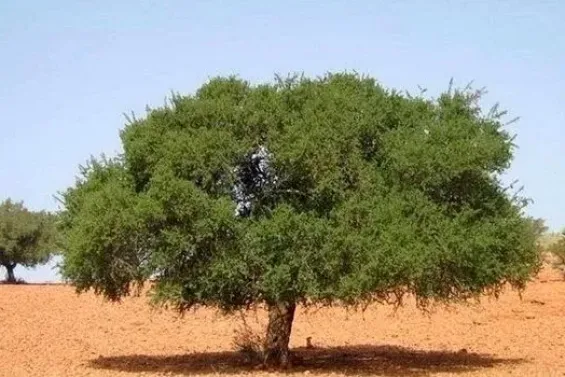
The use of argan trees has roots in the Essaouira region and started over 150,000 years ago, according to archaeology experts who gathered on Sunday in the City of Alizés during a scientific conference organized at Bayt Dakira.
The conference was initiated by the National Institute of Archaeology and Heritage Sciences (INSAP), in coordination with the Essaouira-Mogador Association and the local bureau of the Ministry of Culture. The king's advisor and founding president of the Essaouira-Mogador Association, André Azoulay, attended the conference.
The presentation highlighted the ancient nature of the region and traces of prehistoric usage of the argan tree, which complements the 2024 data about excavations at the emblematic sites of Bizmoune and Jbel Lahdid (province of Essaouira).
Azoulay paid tribute to the research teams for their meticulous work and commitment, emphasizing that these results reinforce Essaouira's central role as a cultural and ecological crossroads for over 150,000 years.
Azoulay also affirmed the need to continue research to better understand the origin and evolution of the argan tree and the role it played in the diet and cosmetic practices of ancient populations.
The director of INSAP, Abdeljalil Bouzouggar, presented findings about human settlement in Essaouira during the 150,000 year history. Archaeological remains showed prehistoric techniques for transforming natural resources and an ancestral know-how around the argan tree, both of which testify to the antiquity and complexity of the human societies that existed in the region.
He explained that the techniques related to the argan tree demonstrate a long process of cultural transmission, confirming that the region was not only inhabited but also a center of human innovation.
In addition, Ismail Ziani, a doctoral researcher and a member of the Bizmoune archaeological team, reviewed the findings on the prehistoric use of the argan tree and explained that it represents a fundamental element of human culture, visible in the techniques and gestures of exploring natural resources.
Furthermore, the conference addressed subsistence strategies, human mobility, and adaptations to climate changes.