

 chargement...


The Umayyads largely followed the traditions established during the time of the Prophet Muhammad, peace be upon him, and the Rightly Guided Caliphs in observing Ramadan. The Abbasids, however, introduced new customs that would later become defining features of the holy month.
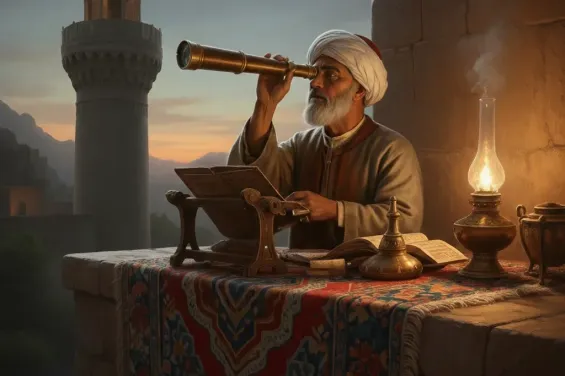
During the Prophet’s time, as well as under the Rightly Guided Caliphs and the Umayyads, the sighting of the Ramadan crescent was entrusted to individuals known for their honesty and integrity. Under the Abbasids, this practice became more institutionalized, with judges officially tasked with observing and confirming the beginning of the fasting month, a model that continues in many Islamic countries today.
The historian and Chief Justice Ibn Khallikan al-Shafi‘i notes in Wafayat al-Ayan that Abdullah ibn Lahi‘a, a judge in Egypt during the reign of Abbasid Caliph al-Mansur in 773 CE, was «the first judge to attend the sighting of the crescent moon in Ramadan», establishing a practice that judges continued thereafter.
Abu Umar al-Kindi confirms this in Kitab al-Wulat wa Kitab al-Qudat, explaining that Judge Ibn Lahi‘a went out with a group known for their righteousness to sight the crescent in Giza, forming what is considered the first organized procession for Ramadan moon-sighting, a tradition he institutionalized for subsequent judges.
The Moroccan traveler Ibn Battuta also describes this ceremony in Tuhfat al-Nuzzar fi Ghara’ib al-Amsar wa Aja’ib al-Asfar, referring to it as «Yawm al-Rukba» (the Day of the Procession). He recounts attending the event in Abyar with Judge Izz al-Din al-Maliji, noting that people gathered after the afternoon prayer on the 29th of Sha‘ban at the judge’s residence. The judge would then ride out, followed by men, women, and children, to a high place outside the city where carpets were laid and the crescent was awaited.
The Musaharati, Mosque Illumination, and Care for the Poor
The Abbasids’ attention to Ramadan was also reflected in the emergence of the Musaharati, the individual who wakes people for the pre-dawn meal (suhour). Historians report that during the reign of Caliph al-Muntasir (861–862 CE), the governor of Egypt, Anbasa ibn Ishaq, noticed that no one was waking residents for suhour. He took it upon himself to walk before dawn from al-Askar to the Amr ibn al-As Mosque in Fustat, calling out, «O servants of Allah, have suhour, for in suhour there is blessing».
Over time, this practice evolved into a formal role, with individuals specializing in it, often using drums and knocking on doors, a tradition that continues in many Muslim societies.
The Abbasids also paid special attention to mosque preparations. On the first day of Ramadan, the caliph and a group of judges would tour regions to inspect mosque lighting and readiness. The state allocated funds for incense, camphor, and musk to be distributed to mosques.
Al-Narshakhi, in History of Bukhara, writes that Al-Fadl ibn Yahya al-Barmaki was the first to order the installation of lanterns in mosques during Ramadan. Ibn Tayfur, in Kitab Baghdad, quotes Ahmad ibn Yusuf al-Katib as saying that Caliph al-Ma’mun ordered officials to encourage people to increase the number of lamps during Ramadan and to inform them of the virtue of doing so.
The Abbasid caliphs were also known for their social welfare efforts during Ramadan. They personally checked on the needy, distributed food and money, and designated shops for the poor. Salary increases and special grants were approved for workers, craftsmen, students, and orphans.
Spiritually and ceremonially, the caliphs hosted large public iftar banquets in their palaces, open to all. Some, most notably Harun al-Rashid and al-Mustansir, were said to disguise themselves to observe the condition of their subjects firsthand. Official processions to Taraweeh prayers added a festive and communal atmosphere to the month of fasting.