


 chargement...


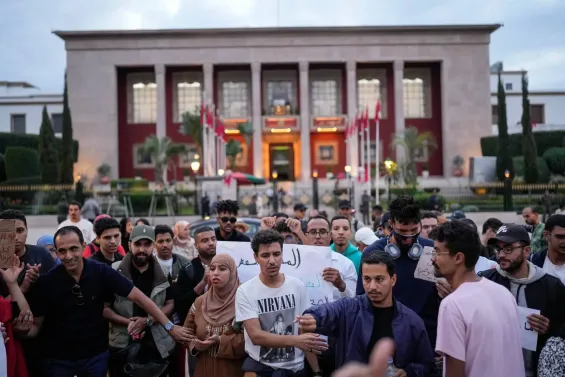
Young people in Morocco account for about one-third of the population, giving them a strategic role in shaping the country’s future. Yet despite political reforms and a strengthened legal framework for political parties, many remain skeptical of political institutions. The latest Afrobarometer survey shows that young Moroccans display lower levels of trust and approval than older generations, particularly toward political actors at the local and party levels.
Afrobarometer is a non-partisan African research network that produces data on citizens’ experiences and attitudes regarding democracy, governance, and quality of life.
While a majority of young people strongly support key democratic principles, such as holding the Prime Minister accountable to parliament and respecting the rule of law, they are more cautious about their implementation. Only about half believe these principles are consistently upheld in practice.
The findings show that just 37% of young Moroccans (aged 18–35) trust parliament, compared with 34% who trust municipal councils and 33% who trust both the Prime Minister and political parties, whether in government or opposition.
Among older respondents (aged 55 and above), levels of trust are slightly higher: 39% for parliament and municipal councils, 34% for the Prime Minister, 38% for ruling parties, and 37% for opposition parties.
More active online, more critical of corruption
Young people are also more likely than older generations to perceive corruption among public officials. Around 33% believe municipal councilors are involved in corruption, compared to 26% of older respondents. Similar gaps appear regarding parliamentarians (32% versus 24%) and government officials (27% versus 23%).
Trust in institutions is closely tied to these perceptions. Young respondents who believe that «some» or «none» of these officials are corrupt tend to express higher levels of trust than those who think «most» or «all» are involved in corruption.
At the same time, 67% of young people believe the Prime Minister should be accountable to parliament for the use of public funds, while 63% say he should respect laws and court decisions, even if he disagrees with them.
The survey also highlights differences in political engagement. Young people are less likely than older generations to vote (40% versus 65%) or feel close to a political party (8% versus 13%). However, they are more active in other forms of participation, including sharing political content on social media (16% versus 4%) and taking part in demonstrations (8% versus 3%).
Overall, the survey suggests that young people’s lower levels of trust in political leaders and institutions are closely linked to their stronger perception of corruption, which shapes how they assess both institutional performance and political leadership.