


 chargement...


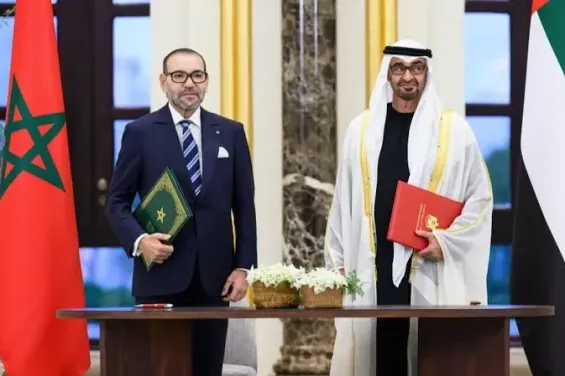
In response to Iranian airstrikes, Saudi Arabia and the United Arab Emirates have turned to Morocco and Egypt, Africa Intelligence reported on Tuesday, pointing to a growing collaboration focused on defense and intelligence.
Morocco is providing key military and technical support to Gulf countries, notably through the involvement of the Royal Armed Forces (FAR) and the sharing of expertise on the use of Emirati THAAD missile defense systems, manufactured by the American company Lockheed Martin, the same source noted.
The General Directorate of National Security (DGSN) is also contributing to stability in the Emirates. On March 26, Abu Dhabi announced the dismantling of a cell affiliated with Iran and Lebanon’s Hezbollah. Five days later, Bahraini authorities reported a similar operation.
Existing military agreements
Military cooperation between Morocco and the United Arab Emirates is based on an agreement signed in May 2006, covering training, exchange visits, and operational, technical, and logistical support. This partnership was expanded in 2014 to include research in military industries and technology transfer.
During the 40-day conflict involving Iran, King Mohammed VI held two phone calls with UAE President Mohamed bin Zayed, reaffirming Morocco’s commitment to supporting a key partner in the Gulf. Morocco has also signed military cooperation agreements with Bahrain and Saudi Arabia, in 2013 and 2015 respectively.
Meanwhile, Egypt has revived the idea of creating a joint Arab force. The proposal was presented on March 8 by Egyptian Foreign Minister Badr Abdelatty during an extraordinary meeting of the Arab League’s Executive Council in Cairo. The initiative draws on the organization’s 1950 «Common Defense and Economic Cooperation Treaty», which states that «an aggression against a member state is an aggression against all», providing for a collective response.
However, implementation remains uncertain. «The current context is not conducive to activating the Arab common defense treaty», said Arab League Assistant Secretary-General Hossam Zaki on Sunday, September 14, ahead of an extraordinary Arab-Islamic summit in Doha, convened in response to an Israeli attack on Qatar.
For the record, Cairo hosted a meeting in April 2015 on the creation of a pan-Arab military force, at the height of the fight against the terrorist group Daesh. Morocco was represented by General Bouchaib Arroub, then Inspector General of the Royal Armed Forces.
Morocco’s involvement in Gulf security reflects a long-standing policy dating back to the reign of Hassan II, when Rabat deployed military personnel to the UAE to train its armed forces.
This cooperation continues today. One Moroccan contractor working with the Emirati army was killed on March 24 during an Iranian missile strike targeting Bahrain, according to a statement from the UAE Ministry of Defense.


 Fil Info