


 chargement...


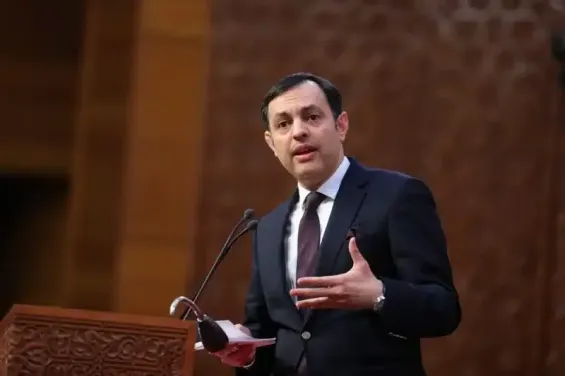
Younes Sekkouri, the Minister of Economic Inclusion, Small Business, Employment, and Skills, affirmed on Thursday that the government is dedicated to executing a comprehensive strategy.
Sekkouri underscored the launch of the «Awrach» program, designed for job seekers, which has provided participants with a stable income for a specified duration. In 2022 and 2023, nearly 250,000 individuals benefited from this initiative, supported by a budget of 2.25 billion dirhams for 2022.
The minister also highlighted the rise in the number of people benefiting from the services of the National Agency for the Promotion of Employment and Skills (ANAPEC), now exceeding 4 million job seekers.
In a related context, Sekkouri introduced a national employment roadmap, which positions economic inclusion as a cornerstone of social justice. This is achieved through empowering youth and women, regulating precarious jobs, and addressing regional inequalities.
He stated that between 2021 and 2025, the Agency facilitated the integration of over 694,000 job seekers into employment programs. This includes nearly 595,000 beneficiaries of the «Idmaj» program and support for more than 99,000 individuals under the «Tahfiz» program. ANAPEC's scope has been broadened to include those without diplomas.
Additionally, labor market data indicates the creation of 851,000 jobs in non-agricultural sectors from 2021 to 2025, despite a loss of approximately 527,000 jobs in the agricultural sector.
In 2025, the national economy saw a significant uptick in job creation, with 193,000 net jobs generated across the country, compared to 82,000 in 2024, Sekkouri noted.
The minister also reported a decline in the national unemployment rate from 13.3% in 2024 to 13% in 2025. Among graduates, the rate fell from 19.6% to 19.1%, and among non-graduates, it dropped from 5.2% to 4.7%. Urban unemployment decreased from 16.9% to 16.4%, while rural areas saw a reduction from 6.8% to 6.6%. Moreover, nearly 740,000 employees were registered with the National Social Security Fund (CNSS) between 2021 and 2024.
In another sector, Sekkouri emphasized the ongoing rollout of the project to universalize social protection, particularly the Mandatory Health Insurance (AMO). Beneficiary numbers have surged from 7.8 million to over 23 million citizens.
Furthermore, direct housing assistance reached over 96,274 individuals, with state financial contributions approaching 7.88 billion dirhams. This aid covers 52% of young people under 40 and 44% of women.