


 chargement...


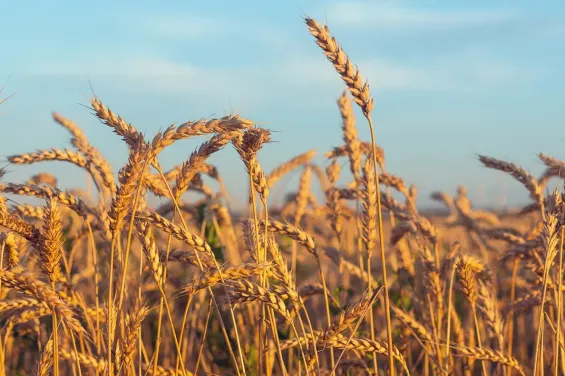
The Economic, Social and Environmental Council said in its opinion titled «Biodiversity in Morocco: Towards Renewed Governance in Support of Sustainable Territorial Development» that the sharp decline in Morocco’s agricultural biodiversity has been accompanied by a significant deterioration in farmland fertility. According to the Council, the average organic matter content in agricultural soils does not exceed 1.3%, remaining below the threshold required to ensure the long-term sustainability of soil fertility.
The Council noted that Morocco’s agricultural sector, which contributes between 12% and 15% of GDP and employs around 30% to 40% of the active population, is characterized by the coexistence of two contrasting models.
On one side is an export-oriented «intensive agricultural model», which generated exports exceeding 85.8 billion dirhams in 2024 and supports the competitiveness of the national economy. However, the model relies heavily on a limited number of crop varieties, imported hybrid seeds, which account for 70% to 80% of vegetable production, as well as intensive use of water and energy resources, weakening the ecological resilience of agricultural systems.
By contrast, the Council highlighted the existence of a «family farming model rich in biodiversity», based on diversified production systems. It plays a central role in food security and in preserving local seeds and resilient animal breeds, yet remains insufficiently recognized and supported.
The Council also pointed out that the «Green Generation 2020-2030» strategy places particular emphasis on the organic farming sector, with the objective of reaching 100,000 hectares of cultivated land by 2030. Certified organic farming areas reached around 13,300 hectares in 2025, nearly eight times the area recorded in 2010.
Organic farming: high ambitions, persistent obstacles
Although organic farming contributes to preserving soils and water resources while reducing the use of chemical inputs, the pace of its development remains below official ambitions. The Council attributed this to the complexity and cost of certification procedures, the weakness of the domestic market, limited access to technical support, and the difficulties faced by small producers.
The opinion also found that real estate pressure and urban expansion are contributing to the gradual reduction of fertile agricultural land, with the share of areas allocated to urban development rising from 51.4% in 1994 to 62.8% in 2024.
Meanwhile, invasive alien species are causing major ecological imbalances, leading to agricultural losses estimated at between 30% and 70%, and in some cases reaching up to 90% in olive groves.
Several indicators, the Council noted, reflect the scale of territorial vulnerability, including the degradation of more than 17,000 square kilometres of rangelands in the Oriental region, the decline of traditional oasis systems, the collapse of the prickly pear sector due to cochineal infestations, the decline of beekeeping, and the retreat of several aromatic and medicinal plant species. In parts of the Souss-Massa region, biodiversity losses exceed 80% due to the spread of greenhouse-based agricultural production methods.
The Council further observed that agricultural biodiversity remains insufficiently integrated into public policies, while monitoring mechanisms for local varieties, adapted breeds, and living soils remain limited and poorly coordinated.
It also pointed to the absence of a comprehensive national ecosystem map and the lack of a red list of Moroccan ecosystems, limiting the country’s ability to prioritize protection and conservation efforts. This is particularly concerning given that more than 80% of areas of major importance for freshwater biodiversity lie outside officially protected zones.
According to the 2022 Agrobiodiversity Index, Morocco scored 54.1 out of 100 overall, above the Mediterranean average of 51, but still below Spain’s 63 and Italy’s 66.
However, the Council stressed that this overall score masks deeper imbalances in agricultural production, where Morocco scored only 41.6. According to the report, this reflects limited crop diversity and the weak integration of soil biodiversity into agricultural policies and practices.