


 chargement...


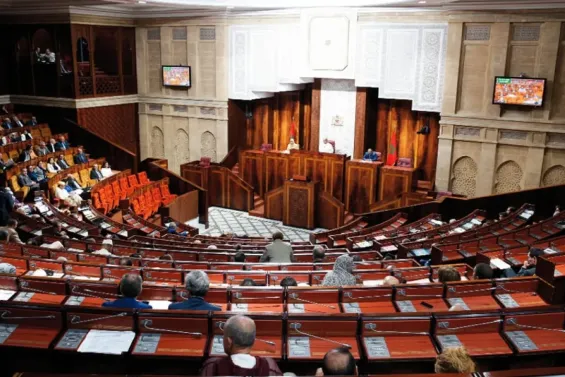
On Monday, the Moroccan House of Representatives approved Bill 51.25, amending and supplementing the dahir that empowers incentives for companies organizing internships for diploma holders as part of training-to-employment initiatives. Passed with 89 votes in favor, none against, and 15 abstentions, the bill now encompasses individuals without diplomas, allowing them to enter high-demand sectors after acquiring necessary skills.
As Morocco grapples with high youth unemployment, averaging 10.8% in early 2026, this new legal framework seeks to enhance access to tailored training programs, aiming for long-term job market integration.
Minister of Economic Inclusion, Small Business, Employment and Skills Younes Sekkouri addressed Parliament, highlighting that the bill will enable non-diploma holders to receive state incentives through programs managed by the National Agency for the Promotion of Employment and Skills (ANAPEC). Presently, the agency has approximately 120,000 pending requests from companies eager for these measures to take effect.
Under ANAPEC's scheme and Law 51.25, internship contracts will be shortened from 24 to 12 months for both graduates and non-graduates. At the conclusion, employers must offer the trainees either open-ended (CDI) or fixed-term contracts (CDD). Companies benefiting from these profiles will also receive additional incentives.
This expansion opens doors for non-diploma holders in sectors like agriculture, construction, and public works, as well as other labor-intensive industries. Younes Sekkouri notes that around 900,000 job-seeking individuals currently lack adequate support.
Moreover, Law 51.25 aims to align training-to-employment programs with evolving labor market needs, ensuring «a fair and efficient distribution of aid and training across all categories of young jobseekers, to reduce unemployment and foster economic integration».
Addressing Demand and Youth Unemployment
The law's provisions will apply retroactively to training contracts from January 1, 2025, up to the publication date in the Official Bulletin for those without diplomas. It also offers support for companies through ANAPEC, with grants ranging from 30,000 to 45,000 dirhams.
This aid will help cover costs, particularly those related to the National Social Security Fund (CNSS) and compulsory health insurance (AMO). Additionally, Law 51.25 now extends insurance coverage during the internship to occupational diseases, beyond workplace accidents.
Companies must retain 60% of program beneficiaries at the official period's end or face penalties for non-compliance.
The measures are poised to benefit NEETs, a significant segment of 2.9 million young people aged 15 to 29 not in employment, education, or training, 72% of whom are women and girls.
Recent data from the High Commission for Planning (HCP) reveal that nearly three-quarters hold no qualifying diploma, with almost half aged 25 to 29, highlighting the magnitude of professional integration challenges.