


 chargement...


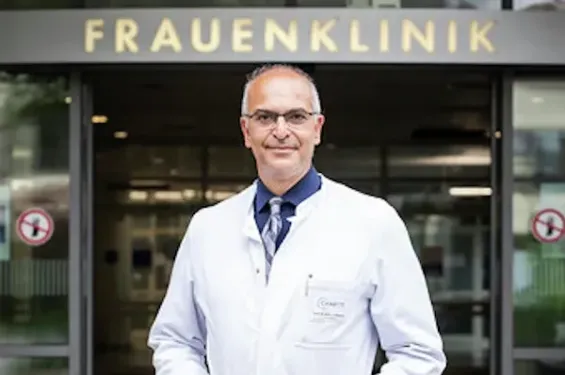
Morocco’s ambassador to Germany, Zohour Alaoui, paid tribute on Tuesday to Jalid Sehouli, the German-Moroccan oncologist and internationally renowned specialist in gynecological cancers, during a ceremony held at the Moroccan residence in Berlin.
The event brought together diplomats, German academics and researchers, as well as Selma Bennis, president of the Association of Moroccan Doctors in Germany (MÄD).
In her remarks, Alaoui praised Professor Sehouli’s remarkable career and highlighted the importance of roots, heritage and the values of education, respect, humility, hard work and service to the community, principles she said are deeply embedded in Moroccan culture.
Addressing younger generations of the Moroccan diaspora in Europe, she stressed that Sehouli’s journey demonstrates that success does not require abandoning one’s origins. Rather, heritage can be a source of strength, resilience, empathy and inspiration. She also recalled that Sehouli was awarded Morocco’s Wissam Al Moukafâa Al Wathania, Second Class, in 2016, and received the Order of Merit of the Federal Republic of Germany in 2026.
Speaking to MAP, Professor Sehouli said he was deeply touched by the recognition. Born in a modest neighborhood of Berlin, he recalled that his path had been far from easy. He began his professional life as a nurse before becoming a physician, professor and medical leader.
«Today, I am proud to work with Morocco and to help strengthen the scientific and human ties between Morocco and Germany», he said. «This journey is not mine alone. It is the result of the support of many people who believe in noble causes and help without expecting anything in return. This is also what Moroccans can bring to Germany and to the world: humanity, honesty, support for others and hope», he added.
Professor Sehouli currently serves as director of the Clinic for Gynecology and Oncological Surgery at Charité’s Virchow-Klinikum and Benjamin Franklin campuses. Throughout his medical and scientific career, he has dedicated his work to combating cancers of the ovaries, cervix, uterus, fallopian tubes and peritoneum, contributing to advances that have improved care for countless women.