

 chargement...


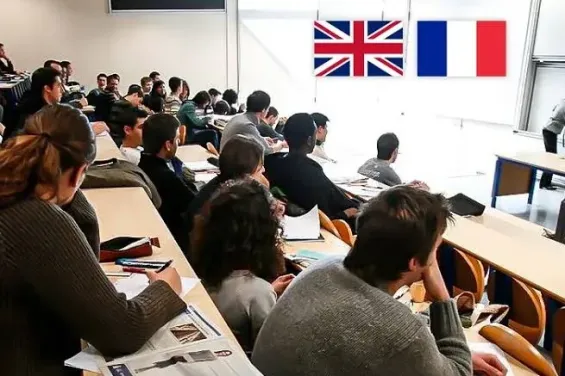
«Morocco is a multilingual country, but today English is taking the lead», says Nora, a student at the Faculty of Letters and Humanities in Rabat. Alongside Arabic and Amazigh, the kingdom’s two official languages, French and English occupy an important place in Morocco’s linguistic landscape. But the balance appears to be shifting.
Where French was once the default language of communication, more and more young Moroccans are turning to English, sometimes creating a gap between those living in Morocco and Moroccans residing abroad (MREs). «Today, we mostly use English, both professionally and in everyday life. It has become a habit», Nora says.
Yet it was not always this way. «I used to speak much more French. I still speak it fluently, but I use it far less». She believes the shift reflects a deeper change. «There is a desire to move away from French, which for a long time shaped the way people communicated in Morocco».
Social media fuels the shift
The change is particularly visible among younger generations. TikTok, Instagram, YouTube and Twitch expose young Moroccans daily to content that is overwhelmingly in English.
In Salé, 28-year-old Safouane has witnessed this transformation firsthand. Although he left school after high school, he says he developed a strong command of English on his own. «I learned naturally, mostly through social media and the internet».
For him, the trend is hardly surprising. «Morocco is a multilingual country. We don't learn languages only at school, but also through our environment». While he still understands French, he now feels more comfortable expressing himself in English, a shift he says he also sees among people around him.
The figures support this trend. According to a British Council study, 40% of Moroccans aged 15 to 25 now consider English the most important language to learn, compared with just 10% who say the same about French. Meanwhile, 85% expect the use of English to increase over the next decade.
«English classes are mandatory for MREs»
This linguistic shift is also having unexpected consequences for relations between young Moroccans and members of the diaspora.
Nesrine, a political science student in Angers, has noticed the change during her visits to Morocco. «Before, speaking French in Morocco felt natural. It was the easy language».
Today, she says, things are different. «More and more often, people reply to me in English when I speak French». Not being very comfortable in English, she sometimes feels excluded from conversations. «Luckily, I speak Darija. Otherwise, I would feel completely out of place».
Younes, 30, an MRE from the Rif who usually switches between French and Riffian, had a similar experience during a recent stay in Agadir. Navigating between French, Riffian and English proved more difficult than he expected. «If I ever move to Morocco, English classes will be mandatory», he jokes.
A reshaping rather than a replacement
The data, however, paints a more nuanced picture. According to Morocco’s High Commission for Planning (HCP), 57.7% of literate Moroccans speak French, compared with 20.5% who speak English. French therefore remains widely used, but the growing influence of English, particularly among young urban Moroccans, is gradually reshaping the country’s linguistic landscape.
Beyond language, the trend also reflects a broader cultural shift. For Nora, the rise of English points to something deeper. «It may reflect a desire among part of the younger generation to move away from a French identity that is still very present».