


 chargement...


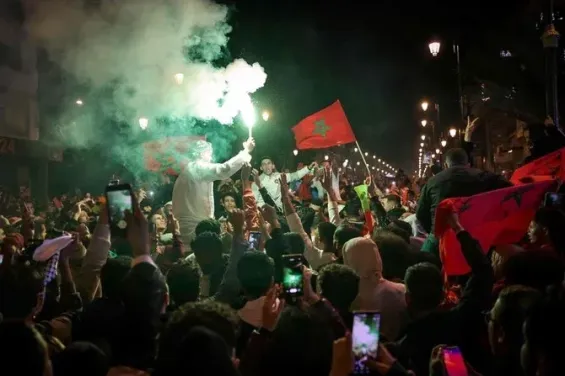
On Tuesday morning, just hours after Morocco knocked the Netherlands out of the World Cup in a dramatic 120-minute thriller settled by penalties, the signs were everywhere: countless cups of coffee and plenty of happy - but exhausted - faces on their way to work.
For many Moroccans, it was another sleepless night. With the tournament taking place in the United States, Canada and Mexico, the time difference has turned following the World Cup into a month-long endurance test for fans.
«I barely sleep anymore since the World Cup started», laughed Fatiha, a football enthusiast from Casablanca who vowed not to miss the tournament's biggest matches.
«I always look forward to Morocco's games the most, but honestly, I've also been watching many of the others because the football has been incredible», she said, pointing to Brazil vs. Japan, France vs. Norway, and Paraguay's shock elimination of Germany.
When football comes before sleep
Others have willingly sacrificed sleep for football. «The World Cup doesn't happen every day», said Yassine, a lifelong football fan from Salé who has been surviving on just two to four hours of sleep a night.
«Some matches start at 2 a.m. and don't finish until 4 a.m., yet I still have to be at work by 7:30 the next morning», he said.
For Maria and her sisters, Spanish-Moroccans living in Málaga, the sleepless nights have doubled as they have been following both Morocco and Spain. «This year, I've set more alarms to watch World Cup matches than I have to wake up for work and, so far, I have absolutely no regrets», Maria said.
Coffee, she joked, has become their «best friend» and «probably the only reason I'm surviving this World Cup».
Sleepless nights for the Atlas Lions
For many supporters, however, Morocco's match against the Netherlands felt less like a choice than an obligation. «I stayed home because I wanted to watch it somewhere quiet and really focus on the game». Fatiha said. «But after the final whistle, I couldn't resist joining everyone in the streets to celebrate. I ended up celebrating until 5 a.m.».
The next day was considerably harder. After watching the match at a fan zone and celebrating Morocco's victory in the streets, Yassine found himself facing Tuesday morning without a minute of sleep.
«I had things to do in Tangier, so I travelled there straight away without sleeping», he admitted.
In Spain, Maria said staying up for Morocco's dramatic victory felt less isolating thanks to the large Moroccan community in her neighborhood. «The celebrations, and the sleepless nights, felt much more special because we were all experiencing them together».
For others, the sleepless nights were simply part of the job. Samira, Morocco correspondent for a Dutch broadcaster, described Monday as the longest day she has had in years.
Her day began at 7:30 a.m. on Monday and did not end until Tuesday afternoon after she covered both the match atmosphere and the celebrations in Nador. «Missing this one was never an option», she said.
«I had been awake for more than 24 hours», she said. «There was so much work to do around the Netherlands-Morocco match».
The hidden cost of staying up
With Morocco still in the tournament, many supporters may have more late nights ahead of them. But sleep is not something the body can simply do without.
«Sleep is a fundamental biological need. It allows both the body and the brain to reset», said Dr. Tayeb Hamdi, physician and researcher in health policies and systems.
«Staying up for one match will have an effect, but repeatedly doing so throughout the tournament is a different story».
According to Hamdi, sleep deprivation quickly affects concentration, productivity and reaction time, increasing the risk of mistakes at work, school or behind the wheel. It also impacts mood, making people more irritable, fatigued and less motivated.
«The longer sleep deprivation continues, the greater the effects become. This is what we call sleep debt, where the body accumulates a deficit that eventually affects the immune system, judgment and decision-making», he explained.
His advice is simple: if you stay up for a match, take a 20- to 30-minute power nap the following day, avoid relying on caffeine, especially energy drinks, and skip heavy late-night meals.
Once the final whistle blows, he also recommends going straight to bed instead of spending another hour scrolling through social media or debating the match online.
«If you've stayed up late, wake up at your usual time and go to bed at your normal bedtime. Maintaining a regular sleep schedule is the best way to preserve your body's natural rhythm».
For children, teenagers and people with underlying health conditions, Hamdi stresses that sleep should always take priority over football.




 Fil Info