


 chargement...


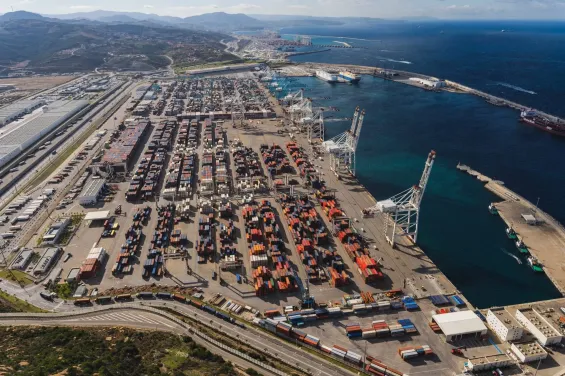
Morocco has emerged as one of the middle-income countries benefiting most from the reshaping of the global economy, thanks to its strategic position between Europe, Africa and China, according to a new study published by Le Grand Continent, a French journal specializing in geopolitics, economics and international affairs.
The study argues that Rabat is increasingly acting as a «connector state», using its geographic position and economic openness to attract investment and strengthen growth despite a turbulent international environment. «Morocco offers an illuminating example among middle-income countries», the authors write, pointing to the kingdom's resilience amid geopolitical tensions, slowing global growth and the reorganization of global supply chains.
According to the researchers, Morocco's non-agricultural economy has grown by an average of 4.4% annually since 2022, rising to 4.8% from 2024. They say this growth exceeds the country's historical trend and outpaces many economies in the same income category, allowing Morocco to gradually recover the output losses caused by the Covid-19 pandemic.
A growth model with challenges
The authors attribute this performance to several factors. They point to sustained public investment, which is expected to approach 30% of GDP, as well as resilient remittances from Moroccans living abroad and improved terms of trade. They also argue that Morocco has capitalized on the reorganization of global value chains, becoming an increasingly attractive destination for foreign direct investment, particularly from Chinese companies involved in electric mobility, batteries and other industrial sectors.
The study nevertheless warns that this growth model faces important challenges. «The main challenge for the Moroccan economy lies in the capacity of public investment to generate spillover effects for private investment and, ultimately, productivity», the authors write. They argue that the current pace of growth will only be sustainable if public spending succeeds in encouraging greater private-sector investment and higher productivity.
Otherwise, the report cautions, «the current recovery could remain nothing more than a temporary phase of expansion». While Morocco's strategic location, macroeconomic stability and industrial base have strengthened its position in the new global economic landscape, the researchers stress that «external connectivity and domestic reforms are complementary»: the country's role as a regional hub can create opportunities, but only reforms in innovation, education, the labor market and the business environment will allow it to translate those opportunities into lasting economic growth.





 Fil Info