

 chargement...


Since last year, a measure criticized even by Spain's central government has been gaining ground across the country's regions. After Madrid in July 2025 and Murcia in September of the same year, Andalusia is now set to remove the Arabic Language and Moroccan Culture Programme (PLACM) from its educational offering. Once the regional government formally confirms its withdrawal from the initiative, the program's optional classes will no longer be taught in public schools across the region from the 2027–2028 academic year.
According to Spanish media, nearly 100 schools will be affected by the decision in a region home to one of Spain's largest Moroccan communities, particularly in Almería. The move reflects the growing influence of the alliance between the conservative People's Party (PP) and the far-right VOX, which has increasingly targeted a program governed by a bilateral agreement between Spain and Morocco. Barely sworn in on July 2, the new regional coalition government also decided to end the program in Granada and Cádiz under a «stability» agreement signed by Andalusian regional president Juanma Moreno and VOX regional leader Manuel Gavira.
The agreement commits Andalusia to withdrawing from the national program that funds the supplementary classes, citing the need to preserve Spain's «customs and traditions» in schools. It also calls for preventing any initiative deemed to constitute «foreign interference» or an attempt to «dilute» Spanish identity. Dismissing claims that the program promotes communalism or places a financial burden on the region, Andalusia's Minister for Educational Development and Vocational Training, María del Carmen Castillo, stated as early as 2025 that «the teaching staff of the PLACM program is entirely managed and funded by the Kingdom of Morocco».
Contacted by Yabiladi, Sabah Yacoubi Channig, vice-president of the Association of Moroccan Workers and Immigrants (ATIM), expressed her «deep indignation and profound concern over the decision by the Andalusian regional government to abolish the PLACM». In a statement sent to our newsroom, she condemned a measure «that affects thousands of families of Moroccan origin who live, work and contribute to the economic, social and cultural development of Andalusia».
According to Yacoubi, the decision represents «a major setback for coexistence, equal opportunities and respect for linguistic and cultural diversity, values that characterize a democratic society».
Passing on language and heritage
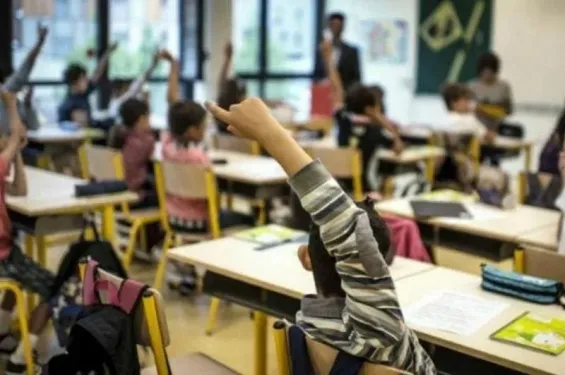
Far from constituting a form of foreign interference, the PLACM is intended to help pupils of Moroccan origin enrolled in Spanish schools learn Arabic and discover Moroccan culture. The classes are optional, take place outside regular school hours, and are taught by teachers appointed by the Moroccan authorities in coordination with Spain's Ministry of Education.
In this regard, Yacoubi described as «alarming» the «attempts to discredit this program by invoking accusations of indoctrination or foreign interference, even though it has operated normally for decades, outside school hours, under the supervision of Spanish educational authorities and in strict compliance with the legal framework». She argued that «criminalizing such a well-established educational program only fuels fear, misinformation and prejudice».
The activist also pointed out that Spain's education system already recognizes the teaching of several religions, including Catholicism, Evangelical Christianity, Judaism and Islam, under existing legislation and cooperation agreements signed by the Spanish state. «Defending certain rights while calling others into question is a blatant contradiction», she said.
According to the regional education department, 38 schools in Almería participate in the PLACM, representing «nearly 40% of the total in Andalusia». Across the region, 1,800 pupils in 95 schools benefited from the program during the 2024–2025 academic year. That compares with 1,741 pupils in 79 schools in 2023–2024, 1,958 pupils in 90 schools in 2022–2023, 1,312 pupils in 76 schools in 2021–2022, and 1,525 pupils in 80 schools in 2020–2021.
The PLACM has operated in Spain since 1985, under a cultural cooperation agreement signed with Morocco in 1980. A joint Spanish-Moroccan committee of experts was established in 1992 to oversee the programme, before the two countries reinforced their commitment through a strategic partnership agreement signed in 2012.