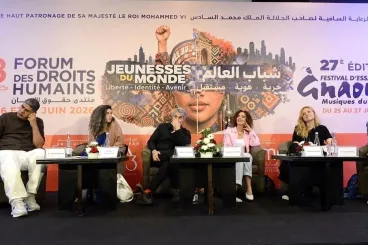
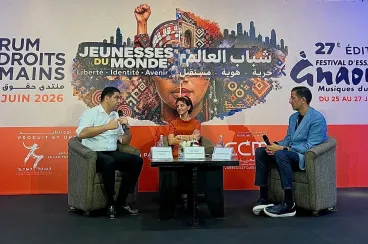
How does one grow up between several languages, several countries and several senses of belonging without being forced to choose? On the second day of the Essaouira Human Rights Forum, writers, philosophers, an anthropologist, researchers and artists were less concerned with defining identity than with setting it back in motion. It was a rich conversation, touching on migration, desire, storytelling and freedom.
In Essaouira, the Human Rights Forum, the intellectual extension of the Gnaoua Festival, opened its 13th edition by placing young people at the heart of the debate. Often portrayed as disengaged or disillusioned, they emerged over the course of the discussions as a generation inventing new forms of expression, transmission and commitment. Artists, writers, sociologists, filmmakers, craftspeople, poets and political leaders all pointed to the same conclusion: the younger generation no longer
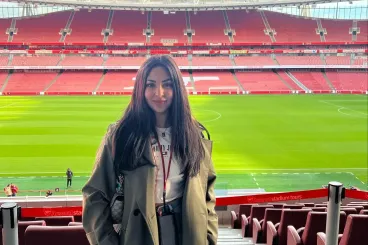
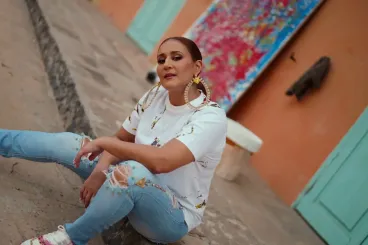
Moroccan-Spanish sports journalist Leyla Hamed spent years moving through the world of elite European football, covering clubs like Arsenal, Manchester City, and Chelsea and rubbing shoulders with some of the game’s biggest names. But Morocco’s historic 2022 World Cup run in Qatar marked a turning point, inspiring her to move beyond tactics and match reports to tell more human stories.
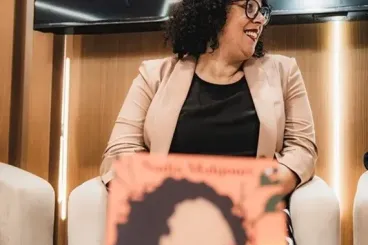
Born in Australia, Nadia Mahjouri only discovered the truth about the other half of her parental heritage when she traveled to her Moroccan father's homeland. Motherhood made her realize the importance of passing on stories, which inspired her writing project that culminated in her debut novel, «Half Truth». She shared the journey of its creation during the SIEL 2026 in Rabat.
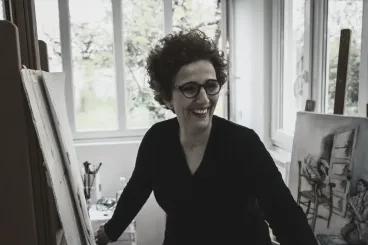
Mériame Mezgueldi, a French-Moroccan artist, uses her evocative figurative art to explore themes of identity and memory, paying tribute to the often-overlooked chibanis, immigrant workers like her father who helped shape France's history. Through her paintings and upcoming graphic novel, Mezgueldi seeks to honor their legacy and bridge cultural divides, turning art into a powerful act of resistance and solidarity.
The Moroccan poet residing in the UAE, Meriem kouis, endeavors to make words a bridge between distant geographies. Her poems transport the reader between the spirit of the desert from which she hails and the urban spaces that have shaped her consciousness, between the profound Moroccan memory and the expansive Emirati presence.
Born in Poissy, France, but with a heart deeply connected to Morocco, Najma Jrane, known as "NAJ," has crafted a unique musical journey that bridges her dual heritage. With a blend of pop, R&B, and Eastern influences, her music celebrates her Moroccan roots, challenging stereotypes and expressing a profound cultural connection.
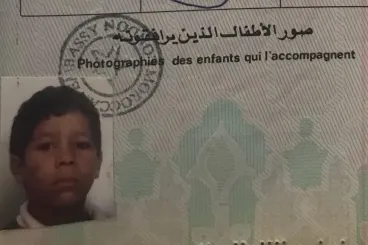
Raised in Scotland but adopted from El Jadida months after being abandoned, Rachid Aboulfadl Mourini has been relentlessly searching for his biological parents for the past five years, without any concrete results. Now 36, he continues to multiply appeals and pursue every possible lead, despite the hurdles and the emotional rollercoaster.
Simo Kassabi's journey from Harhoura to the United States is a testament to resilience and the power of cultural identity. Despite facing isolation and hardship, he transformed his passion for music into a burgeoning career, all while proudly representing Moroccan heritage on the global stage.
 Les articles les plus...









 chargement...