The United Nations Food and Agriculture Organization (FAO) reports that nearly one-third of young women in rural Morocco are neither in school, employed, nor enrolled in training programs (NEET). While Morocco's agricultural system continues to grow, improvements in road infrastructure have helped enhance access to education.
The sequencing of a genome extracted from the remains of an individual from ancient Egypt has revealed that 77.6% of their ancestry traces back to Neolithic North Africa, as defined by researchers in Morocco. In a recently published study, the researchers emphasize that this unprecedented discovery calls for a reassessment of the demographic history of the Nile Valley.
A recent Afrobarometer survey reveals that unemployment is the top concern among young Moroccans, with nearly one-third saying they have «frequently» considered leaving the country for economic reasons.
From June 19 to 21, as part of the Gnaoua and World Music Festival, the 12th edition of the Human Rights Forum brought together researchers, artists, and policymakers to explore a timely theme: «Human Mobility and Cultural Dynamics». Across four panel discussions, mobility was examined not merely as an economic or geopolitical phenomenon, but as a dynamic space of exchange, where culture, history, and representation play a vital role.
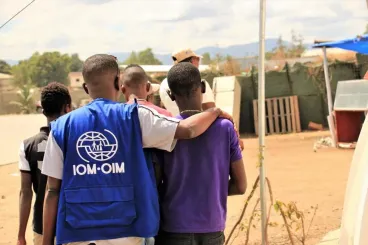
The issue of migration, traditionally viewed through the lens of destination countries, is now undergoing a profound reconfiguration of roles. Among countries of origin, transit, and destination, Morocco is emerging as a key player. On the occasion of World Refugee Day and the 12th edition of the Human Rights Forum, held as part of the 26th Gnaoua and World Music Festival in Essaouira, Yabiladi spoke with Pascal Blanchard, a specialist in the French colonial empire, postcolonial studies, and