


 chargement...


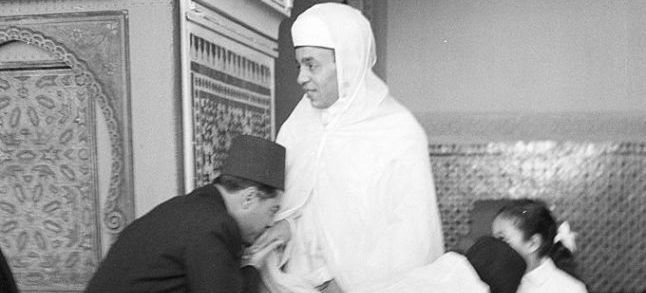
On Friday, March 3, Moroccans mark the 56th anniversary of King Hassan II's ascension to the throne—an event that was celebrated with great pomp for nearly 37 years. Just six days earlier, on February 26, 1961, Crown Prince Moulay Hassan delivered somber news to the nation: King Mohammed V had passed away in Rabat following what was meant to be a minor surgical procedure. The circumstances of this operation have been the subject of various historical accounts, often shaped by the perspectives and proximity of the sources to the royal palace.
By May 1960, Hassan II was Already Leading the Country’s Affairs
Let’s go back in time. It’s Tuesday, July 9, 1957. In response to calls from political leaders, the government, and several prominent figures, King Mohammed V appoints his eldest son, Moulay Hassan, as Crown Prince. Even before this formal designation, the Sherifian Sultan had expressed his desire to establish political institutions that would represent the people in the wake of Independence. This vision began to take shape in August 1956 with the creation of the first National Advisory Council, followed by rural and urban elections in May 1960.
On November 3 of the same year, Morocco saw the establishment of its first Constitutional Council. However, the move was not unanimously accepted. According to the seventh volume of Memoirs of Moroccan Heritage (Nord Organisation, 1986), the council was boycotted by members of the National Union of Popular Forces (UNFP), the National Movement (which later became the Popular Movement, led by Mahjoub Aherdan), and the Constitutional Democratic Party of Hassan El Ouazzani.
From the 1960 elections onward, King Mohammed V had already entrusted his heir with governing responsibilities. «When his son, Moulay Hassan—the future Hassan II—grew impatient with the slow pace of policy implementation, Mohammed V appointed him Vice President of the Council in May 1960 and delegated to him the country’s active governance», notes Universalis.
«The Crown Prince effectively held all powers from May 20, 1960. Nine months later, Mohammed V would pass away following what was theoretically a minor operation», writes Maurice Buttin in Hassan II, de Gaulle, Ben Barka: What I Know About Them (Karthala, 2010). According to Buttin, tensions had emerged between the king and his son, with one of their main disagreements being the exclusion of the Moroccan left from the government.
The Untimely Death of Mohammed V
It’s Saturday, February 25, 1961. King Mohammed V receives Ahmed Balafrej and Boubker Kadiri at the royal palace in Rabat. He is unwell and is scheduled to undergo surgery the next day, February 26—a procedure that would not be his first. In fact, back in 1938, the Sherifian Sultan is believed to have undergone an operation of unknown nature.
On the day of the surgery, a team of surgeons gathers at the palace’s internal clinic. Accounts differ regarding the exact nature of his condition—some mention a deviated nasal septum, others cite tonsillitis, while some even suggest ear cancer. Whatever the cause, it was officially described as a «minor operation», as Jean Wolf notes in The Secrets of Spanish Morocco: The Epic of Abd-El-Khaleq Torrès (Eddif, 1994).

King Hassan II at his father's funeral. / Ph. Phillipe Le Tellier
All we know is that Mohammed V, who suffered from hemophilia, had a heart attack shortly before the end of the procedure. His untimely death was announced on the radio around 6 p.m. Before this, «devastated by the most intense grief of his life, Prince Moulay Hassan silently mourned the loss of this wonderful father he adored, this sovereign of impressive moral stature», describes writer Jean Wolf.
The new king, after summoning the ministers, entered the Council chamber. «Gentlemen, the king is dead. From now on, you will answer to me for the management of the department entrusted to you», he told the ministers. Abd El Khaleq Torrès, then Minister of Justice, drafted the traditional Baya to officially proclaim Moulay Hassan as the new King Hassan II. This proclamation was later ratified by all members of the royal family, the Alaouite Chorafas from all cities, government officials, and members of the councils of ulemas.

The late King Hassan II leading the procession at the funeral of the late King Mohammed V. / Ph. AFP
The king is dead, long live the king!
The father of independence and the modern Moroccan nation was then buried in the mausoleum that would bear his name. Some 600,000 Moroccans awaited the passage of his coffin along the main boulevards of Rabat, deeply moved. «Hundreds of women fainted under the scorching sun. At 3:30 p.m., the funeral procession set off, as tens of thousands of voices, choked with emotion, chanted 'God is great,'» recounts Paris Match. That day, Prince Hassan led the mourning, accompanied by his younger brother Moulay Abdallah. «Eight days later, Morocco celebrated its new king. Joy dried the tears, but mourning was impossible because Mohammed V was the soul of the country's independence», continues the famous French magazine.
On March 3, the late King Hassan II ascended the throne of his ancestors. On that very day, he addressed the nation with a deeply moving speech. «Dear people, I address you knowing that the wounds are still fresh. We were surprised by his passing and hoped he would be among us to continue his noble mission... I announce to you, dear people, that I am taking the reins of power... to respond to the social will illustrated by your allegiance», he said.
About his father, the sovereign affirmed three years later that Mohammed V had «a hardness and extraordinary kindness». «I could never approach him without a feeling of intimidation and deep respect. He never disappointed me», he confided to Abd El Khaleq Torrès. His responsibilities as king officially began at that moment—a role that would not be easy, as two years after his ascension, he would face the famous Sand War between Morocco and Algeria.