


 chargement...


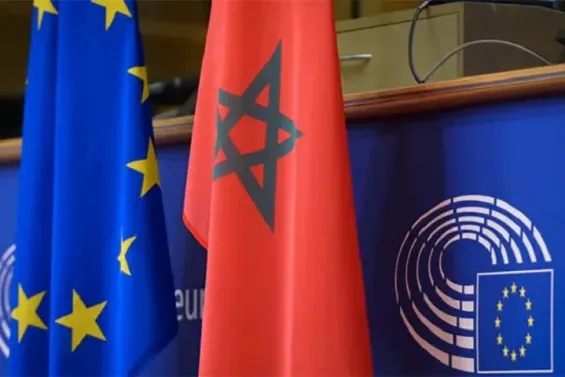
On October 4, 2024, the decisions of the Court of Justice of the European Union (CJEU) excluding Western Sahara from the association agreements between Morocco and the EU will officially take effect. With less than three months to go before these trade agreements are annulled, efforts are already underway within European institutions to find workarounds, according to a report published Wednesday by Africa Intelligence. «Rabat and Brussels are working on a solution to the agricultural export crisis», the newspaper noted.
The first major step in this attempt to bypass the ruling took place on July 11 in Brussels, during a meeting between a delegation from Morocco’s General Confederation of Enterprises (CGEM) and Maria Isabel Garcia Catalan, head of the European Commission’s Taxation and Customs Union department.
The Moroccan business representatives, accompanied by a European agricultural investor active in the Sahara, presented Garcia Catalan with a report outlining the impact of the CJEU ruling on Moroccan exports to the EU. The CGEM delegation also met with Finnish MEP Pekka Toveri, a member of the European People's Party Group, according to Africa Intelligence.
Spanish Advocacy Grows in Brussels
These behind-the-scenes talks in Brussels come amid heightened mobilization by Spanish associations calling for strict enforcement of the CJEU’s October 4 rulings. On July 21, the Spanish Federation of Consumers and Users (CECU) and the Coordination of Farmers and Livestock Organizations (COAG) filed a joint complaint with Spain’s Directorate-General for Consumer Affairs under the Ministry of Social Rights, Consumer Affairs, and the 2030 Agenda.
They denounced what they described as a «failure to comply with labeling rules for cherry tomatoes sold in Spanish supermarkets», singling out a French company cultivating the crop on hundreds of hectares in the Sahara.
This action follows an earlier request from MEP Carmen Crespo to review the EU-Morocco trade agreement, which she argues creates an «unacceptable imbalance» in the European fruit and vegetable market, particularly affecting southern Spain. She called for «strict controls expressly excluding any products from Western Sahara».
The labeling issue has long been a source of tension between Morocco and Spain’s People's Party. In the past, the European Union has responded cautiously to COAG’s demands for clarity on labeling practices for tomatoes, melons, and other produce from the Sahara.
«There is a lack of transparency. We’re told negotiations are ongoing with Morocco to amend the agreement and ensure compliance with the CJEU ruling, which states that products grown in Western Sahara must be labeled as Sahrawi, not Moroccan», said Andrés Góngora, a COAG member who visited Brussels in June. «But they don’t give details; they just say they can’t disclose more».
Looking ahead, Rabat is set to host the first session of the Morocco–European Union Parliamentary Friendship Group in October.





 Fil Info