


 chargement...


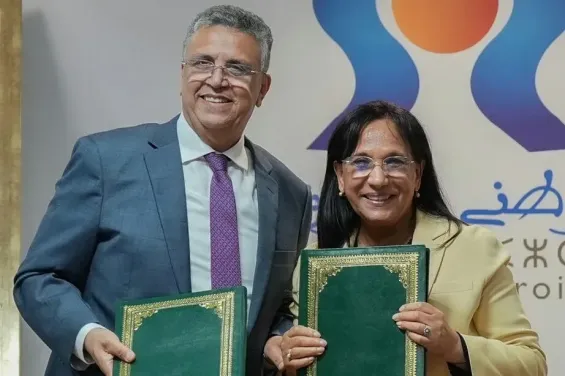
Intervention and protection mechanisms in cases of human trafficking were strengthened on Wednesday with the adoption of a new legal framework. Formalized in Rabat by the National Human Rights Council (CNDH) and the National Commission for the Coordination of Measures to Combat and Prevent Human Trafficking (CNCLT), a memorandum of understanding (MoU) aims to enhance coordination among stakeholders for more effective action at the territorial level.
Speaking at the signing ceremony, CNDH President Amina Bouayach stressed that the goal of this framework is to consolidate the implementation of existing mechanisms. It seeks to establish best practices for assisting trafficking victims and ensuring appropriate care, while moving toward a more proactive and anticipatory approach.
The objective, she said, is to «unify the efforts of all stakeholders to streamline protection and support processes, through a practical approach aligned with both national and international standards, while addressing key strategic challenges». Bouayach added that strengthening coordination and implementation at the local level will also reinforce preventive efforts.
«This memorandum of understanding aims to protect victims of human trafficking and place this issue at the forefront of priorities, while improving coordination to address the growing challenges linked to this phenomenon. The ultimate goal is to preserve human dignity and combat all forms of exploitation», she said.
She further warned that human trafficking is becoming «one of the most serious human rights violations», due to the intersection of organized crime with economic and social vulnerability, the impact of conflicts, and digital transformations that have given rise to new forms of exploitation, particularly affecting women and children.
Beyond a purely punitive approach
In this context, Bouayach noted that a «purely punitive» approach has shown its limits, calling instead for «comprehensive action grounded in human rights, combining prevention, protection, and follow-up to ensure swift and effective intervention tailored to victims’ needs».
Justice Minister Abdellatif Ouahbi, for his part, said the MoU builds on progress already made at the legislative level, drawing on accumulated experience. The framework aligns with Law 27.14 on combating human trafficking, adopted in August 2016, which provides for severe penalties, from imprisonment to life sentences, while also establishing preventive mechanisms, notably through the creation of the CNCLT.
The MoU also establishes a national mechanism for supporting trafficking victims, based on the aforementioned law and the 2023–2030 National Plan led by the commission. It reinforces the National Referral Mechanism (NRM), which aims to identify, protect, and reintegrate victims through dedicated units, with particular focus on women and minors, who account for nearly 53% of identified victims.
According to Ouahbi, this enhanced coordination is part of a broader effort to modernize the legal framework, which «still contains inequalities in the treatment of women and children». He stressed the need to «evolve laws and practices» to support development, noting that this cannot be achieved if half of society remains disadvantaged in access to justice.
Law 27.14 is also aligned with the Palermo Protocol, part of the United Nations Convention against Transnational Organized Crime.



 Fil Info