


 chargement...


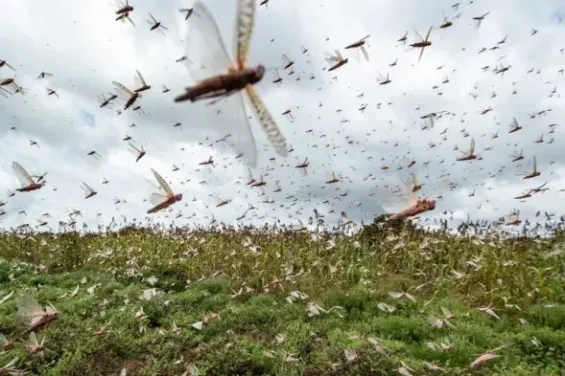
The Food and Agriculture Organization of the United Nations (FAO) reports a surge of winged adult locust groups across expansive areas in Morocco, with 87,363 hectares treated, including 33,500 by air. In its information bulletin dated July 7, 2026, the agency warns that these groups could evolve into small swarms as they mature.
Amid this development, the FAO anticipates that «some mature groups will migrate to the Oriental region and western Algeria to continue breeding in July». At the same time, «most could move south to Mauritania or other Sahel countries, where summer breeding is expected to begin».
As early as last May, these winged adults began appearing in Morocco, «as most hopper groups and bands completed their final molt». Their numbers swelled in June. «In the first ten days of the month, scattered transiens hoppers and groups, mainly at stage 5, as well as young winged adults, were observed near Guelmim (2859N/1003W), along the coast from Tiznit to Agadir (3025N/0935W), between Foum El Hassan (2901N/0853W) and Foum Zguid (3005N/0652W), and to a lesser extent between Merzouga (3105N/0401W) and Errachidia (3155N/0426W)», the bulletin notes.
Forecasts suggest that immature winged adult groups and small swarms might head further south, potentially reaching Mauritania. This situation is particularly concerning during a critical phase of the agricultural season in southern Morocco, where date production is vital. Last June, farmers in Errachidia expressed worries about the desert locusts' return to the oases.
On the ground, farmers had pinned hopes on this season to recover from years of drought-inflicted losses. Now, the threat of locusts looms large, along with potential economic repercussions. The FAO emphasizes that «survey and control operations should continue at a sustained pace».