


 chargement...


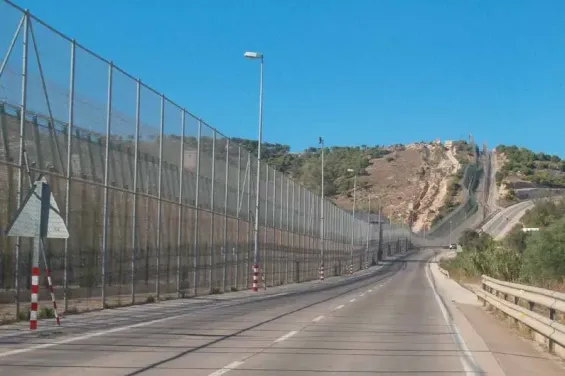
The removal of the border fence in Gibraltar has reignited debate in the Spanish enclave of Melilla, after the Nueva Melilla party and the city's Muslim community called for a similar approach on the border with Morocco, advocating the dismantling of the border barrier in favor of a model based on cooperation and shared prosperity.
Nueva Melilla said it hoped the city would one day witness a scenario similar to Gibraltar's, expressing its desire to see «the fence separating Melilla from its immediate surroundings» removed. The party also envisioned the presidents of Melilla and Nador jointly announcing cross-border projects, mutual investments, and a new era of institutional cooperation.
It stressed that closer cooperation with Morocco would not entail relinquishing sovereignty or altering either side's political position, but would instead create a framework for collaboration aimed at fostering the economic and social development of both territories.
In a separate statement, Melilla's Muslim community lamented the daily conditions at the border crossings in Melilla and Ceuta, pointing to long waiting times that affect workers, students, and business owners. It said the current situation carries significant economic and human costs while hampering the development of both regions.
The community argued that the existing cooperation between Spain and Morocco on counterterrorism, irregular migration, and economic issues reflects a political climate that could support exploring new models of border management that, until recently, would have seemed unthinkable.
Among its proposals was the creation of a working group bringing together experts from Spain, Morocco, and the European Union to examine alternatives for more efficient and fluid border management while preserving security measures and border controls, without affecting the legal or political status of Melilla and Ceuta.
It also proposed shifting the main focus of border control to seaports and airports, supported by advanced technology and enhanced security cooperation between the relevant authorities.
«The borders of the future should not be measured solely by their capacity for control, but also by their ability to generate prosperity and strengthen trust and coexistence», the Muslim community said.
Nueva Melilla said it hoped the city would one day witness a scenario similar to Gibraltar's, expressing its desire to see «the fence separating Melilla from its immediate surroundings» removed. The party also envisioned the presidents of Melilla and Nador jointly announcing cross-border projects, mutual investments, and a new era of institutional cooperation.
It stressed that closer cooperation with Morocco would not entail relinquishing sovereignty or altering either side's political position, but would instead create a framework for collaboration aimed at fostering the economic and social development of both territories.
In a separate statement, Melilla's Muslim community lamented the daily conditions at the border crossings in Melilla and Ceuta, pointing to long waiting times that affect workers, students, and business owners. It said the current situation carries significant economic and human costs while hampering the development of both regions.
The community argued that the existing cooperation between Spain and Morocco on counterterrorism, irregular migration, and economic issues reflects a political climate that could support exploring new models of border management that, until recently, would have seemed unthinkable.
Among its proposals was the creation of a working group bringing together experts from Spain, Morocco, and the European Union to examine alternatives for more efficient and fluid border management while preserving security measures and border controls, without affecting the legal or political status of Melilla and Ceuta.
It also proposed shifting the main focus of border control to seaports and airports, supported by advanced technology and enhanced security cooperation between the relevant authorities.
«The borders of the future should not be measured solely by their capacity for control, but also by their ability to generate prosperity and strengthen trust and coexistence», the Muslim community said.




 Fil Info