


 chargement...


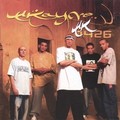
Filmmaker and rapper El Mahdi Lyoubi, also known as Black Wind, was informed on July 10 at Casablanca airport, shortly before departing for France, that he was prohibited from leaving Morocco. Currently in pre-trial detention, he is set to appear before the Casablanca criminal court this Wednesday, facing charges of «insult to a constitutional institution». Since his arrest, a wave of artists has rallied for his liberation.
In a statement issued to Yabiladi, Black Wind’s support committee announced planned gatherings in «Casablanca, Marseille, Geneva, Paris, Amsterdam, and Brittany». Concerts and screenings are slated for the coming days. Prior to his arrest, Black Wind had graced stages in Morocco and internationally, including a September 2025 performance in Casablanca at the L’Boulevard festival.
Having performed in countries such as Turkey, the Netherlands, Germany, France, and Switzerland, Black Wind is not only a rapper but also a filmmaker who directs his own music videos. His discography includes around twenty singles, an EP, and two vinyl albums.
Political engagement through rap
Black Wind first gained attention in the 2010s with politically charged music, during the transformative Arab Spring period. Based in Marseille since 2017, he maintains strong ties to youthful protest movements, including Generation Z (GenZ 212). His work delves into themes like exile, societal issues, and collective solidarity.
His support committee argues that the arrest is «not an isolated case». «Since autumn 2025, numerous artists have faced prosecution or conviction in Morocco for their work or online posts», they stated. They cited the case of rapper Jawad Asradi (Pause Flow), arrested in November 2025 and handed a three-month suspended sentence for insulting an institution, due to his song lyrics. Another case involved rapper Hamza Raid, who received a six-month suspended sentence.
In March 2026, rapper Souhaib Qabli was sentenced to eight months for insulting a constitutional institution and disseminating false information. In February of the same year, film distributor Zineb Kharroubi was given a six-month suspended sentence for digital incitement to crime.
A petition, signed by a large contingent of artists and activists, has been initiated by Black Wind’s support committee. Signatories include rappers like Don Bigg, Khtek, ElGrande Toto, Ouenza, Dizzy Dros, Raid, and 7liwa, as well as singer-songwriters Oum, Younès Mégri, and Rhita Nattah. Filmmakers such as Faouzi Bensaïdi, Saïd Hamich, Fatym Layachi, and Sonia Terrab have also joined. They express «deep concern» over a case affecting more than just Mehdi.
«It raises vital questions about respect for the rule of law, including the presumption of innocence, a fair trial, and freedom of creation and expression», the statement asserts, referencing Article 25 of the Moroccan Constitution, Article 19 of the Universal Declaration of Human Rights, and the International Covenant on Economic, Social and Cultural Rights.
Tensions reflected in rap
Historically, social unrest has fueled rap music, resulting in critical songs and rising arrests. Dominique Caubet, emeritus professor at INALCO, comments on the treatment of protest rap, highlighting that «rap often voices social demands, and Morocco is no exception».
«Early Moroccan rappers exposed societal injustices through their lyrics, be it Bigg’s initial works (Mgharba tal mout), Mobydick, or Muslim. Collectives like L’Bassline, featuring El Mahdi Lyoubi, also contributed with tracks like Chayllah Système.»
Caubet recalls that it was only after the 2011 February 20 Movement that rapper arrests began, triggered by lyrics perceived as challenging to authorities. Mouad l7a9ed was notably arrested multiple times from 2011 to 2014. Another wave of arrests occurred in 2018 with the track «3ach a cha3b», involving Gnawi, and more recently, ElGrandeToto in 2023 over drug-related statements.
Caubet emphasizes the seemingly arbitrary arrests, noting that «often, they face prosecution for general criminal charges, or police complaints when music videos become controversial». Their lyrics aren't always targeted directly, and the boundary that leads to arrest can be obscure.
In response, Black Wind’s support committee insists that «pre-trial detention should be an exceptional measure». They underline the need for «the presumption of innocence» to remain until a decisive court ruling and call for «the immediate release of the rapper and director», or «at least temporary release during the judicial process».
The committee further demands an «end to prosecutions targeting artists for their opinions, stances, or works».




 Fil Info