


 chargement...


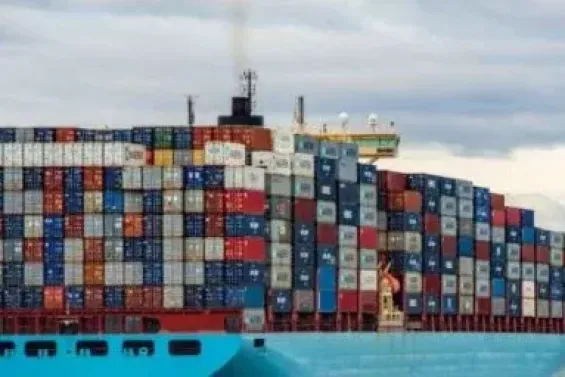
The United States will impose a 12.5% tariff on imports from Morocco starting July 24 after determining that the kingdom has failed to effectively prohibit the importation of goods produced with forced labor.
The measure, announced by the Office of the United States Trade Representative (USTR) in a Federal Register notice published on July 23, follows a Section 301 investigation into Morocco's import regime. USTR, says the decision is «based on the findings in the investigation of Morocco, considering the public comments, testimony, and the advice of the Section 301 Committee, as well as the advice of advisory committees, and in accordance with the specific direction of the President».
According to the USTR, the new tariff and the list of exempted products are «appropriate to obtain the elimination of the acts, policies, and practices determined to be actionable in the investigation».
Morocco is among 54 economies placed in the higher tariff category, alongside China, Japan, South Korea, Brazil, Australia, New Zealand, Turkey, Israel, Egypt, Saudi Arabia, the United Arab Emirates and Singapore, among others. Countries that already ban imports made with forced labor, have committed to adopting such measures through an Agreement on Reciprocal Trade (ART), or operate a partial regime will instead face a 10% tariff.
The new duties apply to the United States' 60 largest trading partners, representing 99.4% of U.S. imports. Announcing the decision, U.S. Trade Representative Jamieson Greer said the measure aims to address both labor rights and trade concerns. «Today's action will begin to correct what is both a human rights abuse and distortive trade practice to improve the welfare of workers everywhere», he said.
Replacing a temporary 10% levy
The tariffs replace a temporary 10% levy that expires on Friday. That measure had been introduced earlier this year after the U.S. Supreme Court ruled that many of the reciprocal tariffs imposed globally by President Donald Trump under emergency powers had been enacted unlawfully. Unlike those earlier tariffs, which were based on broader trade policy, the new duties are specifically linked to U.S. investigations into how trading partners address imports made with forced labor.
The decision comes despite the Morocco-U.S. Free Trade Agreement, which has been in force since 2006 and eliminated tariffs on most goods traded between the two countries. However, because the new duties were imposed under Section 301 of the U.S. Trade Act, they apply outside the framework of the bilateral trade agreement.
The tariffs take effect on July 24, with a limited exemption for goods already in transit before that date. Products already subject to separate U.S. tariffs, including steel and aluminum, as well as certain energy products and fertilizers, are excluded from the new measure.




 Fil Info