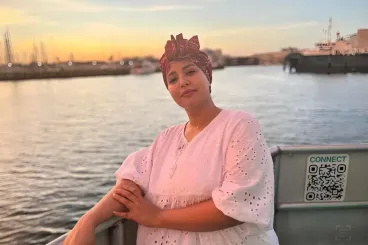
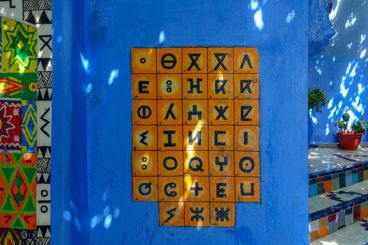
When Nisrine Kasbaoui returned from the United States to Morocco, it was not just a move, but a return as a bearer of dreams and identity. Her journey was about more than geography, it was about giving a cultural voice through fabrics and designs that carry deep meaning. What began as a personal need grew into a project celebrating Amazigh heritage in a modern style, aiming for global reach without losing its roots.
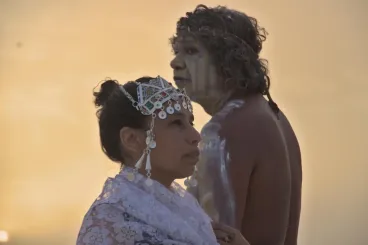
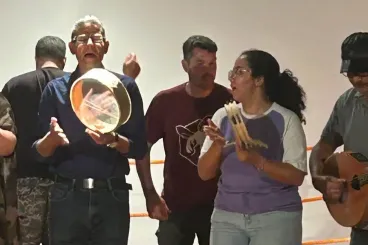
Maysoun Bouga, originally from Casablanca, uses Applied Theater to reconnect with her Amazigh heritage by rediscovering Moroccan folktales and language. Her cross-cultural show Sunrise to Sunset, which will take place on Thursday, June 12, in Casablanca, blends storytelling, dance, and music to celebrate Amazigh and First Nations Australian cultures.
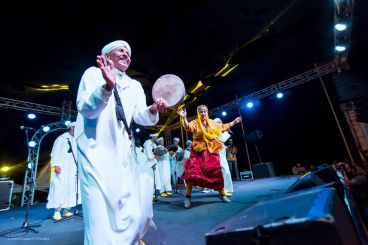
From the heart of the Atlas Mountains, specifically Oulmes - Aqchmir, a young woman emerged to break barriers and redefine Amazigh heritage through the dance of «Ahidous», a tradition long associated with men. Neither her age nor societal expectations stood in the way of her passion; instead, they became her strongest motivation to push forward. This is the story of Morocco’s first female leader of an Ahidous troupe.
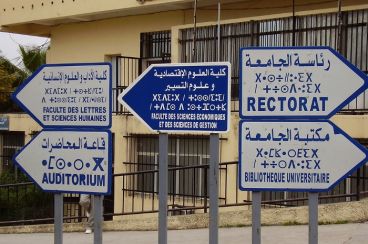
In 2024, Darija remains the dominant in Morocco, with French playing a significant role in professional settings and English steadily rising, according to a recent survey on the Moroccan linguistic landscape. The survey also highlights the country's multilingualism, with a growing number of people speaking multiple languages, especially among younger and urban populations.
The Houara is an Arabized tribe in the Amazigh-speaking Souss region, known for its unique folklore blending Arabic lyrics with Amazigh rhythms and choreography. Their signature dance features high jumps, synchronized clapping, and poetic storytelling, drawing comparisons to flamenco for its dramatic expression and precision.
 Les articles les plus...









 chargement...