


 chargement...


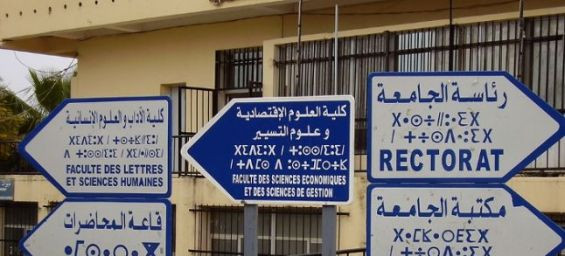
A recent survey conducted by the Moroccan research firm Sunergia offers a comprehensive look at the linguistic landscape of Morocco in 2024. The findings highlight the dominance of Darija, the widespread use of French, the institutional role of Classical Arabic, and the growing presence of English among youngsters, all shaped by social, economic, and technological dynamics.
Published in April 2024, the survey is based on responses from 1,019 participants, collected between September 2023 and early 2024. It primarily focuses on language proficiency and the contexts in which different languages are spoken.
In 2024, Darija remains predominant in Morocco, spoken fluently by 100% of respondents and considered the mother tongue by 94%. It is the most commonly used in both personal (94%) and professional (69%) speech, as well as in writing for personal (69%) and professional (39%) exchanges.
Classical Arabic is spoken fluently by 29% of Moroccans, with a higher presence among younger individuals (34%), urban dwellers (37%), and higher social classes (44%). Despite its limited use in personal communication (2% in speech and 9% in writing) and professional settings (8% in speech, 10% in writing), Classical Arabic retains a crucial role in education, administration, and the media.
Amazigh is spoken fluently by 25% of the respondents, with 21% considering it their mother tongue, especially in the south (39%). It is more commonly used in personal conversations (19%) than in written (8%) or professional contexts (less than 8%).
French continues to dominate professional settings
Though not an official language, French remains widely spoken, with 19% of Moroccans fluent in it. Usage varies by age and social class, peaking among those under 34 (24%) and those aged 55-64 (18%). The language is mostly prevalent in professional communication, especially in writing (32%) and speech (31%), often surpassing Darija in written exchanges. Usage is also significantly higher among wealthier social classes (43%) compared to lower social classes (6%).
English is spoken fluently by 9% of Moroccans, with significant concentrations among younger people (17%), urban residents (12%), and higher social classes (22%). While its use in personal exchanges remains limited (3% in speech, 4% in writing), English is increasingly present in professional settings (7% in both speech and writing).
Spanish and German remain marginal, each spoken fluently by only 1% of the population. Their use is negligible in both personal and professional contexts.
Strong multilingual trend
The survey reveals a strong multilingual trend among Moroccans. Forty-five percent are monolingual, speaking only Darija. Thirty-four percent are bilingual, with the most common combinations being Darija + Amazigh (48%), Darija + Classical Arabic (37%), and Darija + French (12%). The Darija + Amazigh profile is more common among those aged 35-54, rural residents, southerners, and lower social classes. The Darija + Classical Arabic profile is typical of those over 65, urban dwellers, and wealthier individuals. The Darija + French combination dominates among those aged 55-64, people from central Morocco, urban residents, and higher social classes.
Fourteen percent are trilingual, with the most common combinations being Darija + Classical Arabic + French (42%), Darija + Amazigh + Classical Arabic (27%), and Darija + French + English (21%). The Darija/Classical Arabic/French profile is most common among those over 55, urban residents, and wealthier social classes. The Darija/French/English trio is prevalent among young people aged 18-24.
Finally, 7% of Moroccans are polyglots, speaking four or more languages. This phenomenon is more frequent among young people aged 25-34 (11%), urban dwellers (9%), and higher social classes (20%).

 Fil Info