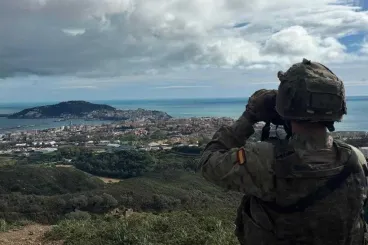
Debate in Spain over Ceuta and Melilla is intensifying after statements from U.S. officials raised questions about their status, prompting the People’s Party to take action on the ground while the government opts for a cautious approach to avoid escalation.
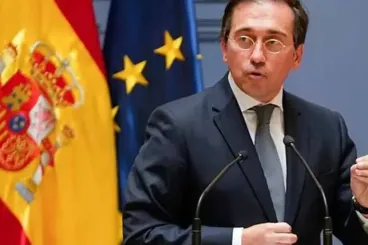
Statements and reports attributed to U.S. officials are rekindling debate over Spain’s «sovereignty» of Ceuta and Melilla. Against a backdrop of rising tensions between Madrid and Washington, these signals are fueling growing concern in the Spanish media.
Amidst Morocco's rising influence bolstered by alliances with the United States and Israel, Spanish defense circles express growing concern over the strategic vulnerabilities of Ceuta and Melilla. A comprehensive report by the Spanish Institute for Strategic Studies warns of hybrid warfare threats, urging Spain to bolster security and infrastructure to counter Morocco's assertive stance in the Strait of Gibraltar.
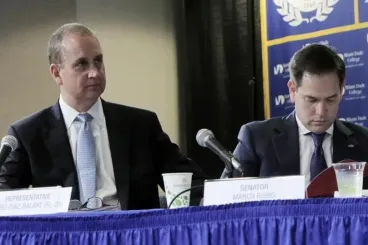
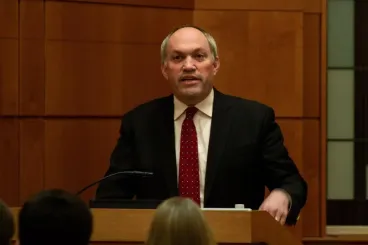
In the United States, Spain's "sovereignty" over Ceuta and Melilla is once again being challenged. Following statements by Michael Rubin, a former Pentagon advisor, it is now Republican Congressman Mario Díaz-Balart, an ally of Marco Rubio, who is criticizing Spain.
In the United States, pressure on the Polisario Front continues to mount. Alongside congressional initiatives aimed at designating the group as a terrorist organization, a former Pentagon adviser is now calling on the United Nations to shut down the Tindouf camps. He bases his appeal on a series of arguments he considers compelling.
The call doesn't come from Rabat or Madrid, but from Washington. In an op-ed published by the American Enterprise Institute think tank, American analyst Michael Rubin suggests that Morocco should organize a new «Green March» to reclaim Ceuta and Melilla.
 Les articles les plus...









 chargement...