


 chargement...


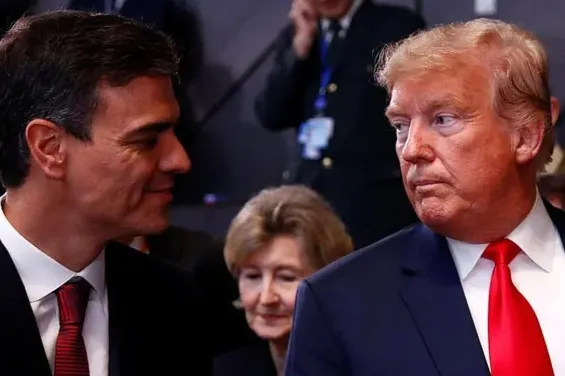
American voices questioning Spain’s sovereignty over Ceuta and Melilla are raising growing concern in Madrid. According to El Confidencial, Republican Representative Mario Díaz-Balart has pushed the issue within the House Appropriations Committee, which noted that the two cities, «administered» by Spain, are located in Morocco, and urged Secretary of State Marco Rubio to promote an agreement between the two countries on their future.
Díaz-Balart had already stirred unease in Spanish political circles in early April, when he stated in an interview with a conservative Spanish outlet that «Ceuta and Melilla are not on Spanish geographical territory but on Morocco’s», adding that relations between Morocco and the United States are longstanding and very positive.
The concerns highlighted by El Confidencial are not isolated. Vozpópuli recently reported that the White House had reviewed «a report critical of Spain», addressing Ceuta and Melilla and presenting arguments favorable to Morocco.
Mounting pressure on Madrid
According to the same source, the document recommends that President Donald Trump «open a debate on the sovereignty» of the two autonomous cities, in the context of close U.S.–Morocco relations.
The Spanish outlet, close to the far right, claims the report was drafted after Prime Minister Pedro Sánchez refused to allow U.S. forces to use the Rota and Morón airbases for an offensive against Iran.
Meanwhile, Reuters reported that the U.S. Department of Defense is considering measures in response to Spain’s refusal to support the Israeli-American operation against Iran, including the possibility of excluding Madrid from certain NATO arrangements.
Since the launch of the offensive on February 28, Sánchez has publicly rejected requests for U.S. aircraft to use Spanish airspace, including those operating from NATO bases in Rota and Morón.
Further fueling concerns in Spain, the U.S. Secretary of Defense announced on May 1 the withdrawal of 5,000 American troops stationed in Germany, a presence dating back to the end of World War II. The move coincided with the arrival in Morocco of U.S. Army Secretary Daniel Driscoll.
It is worth noting that Ceuta and Melilla are not covered by NATO’s collective defense clause. Spain’s attempts to include them under the alliance’s protection have repeatedly failed, including at the NATO summit held in Madrid in June 2022.





 Fil Info