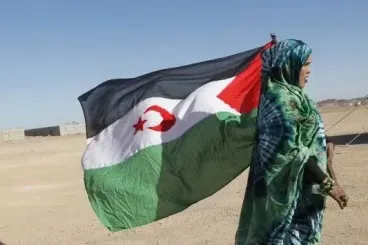
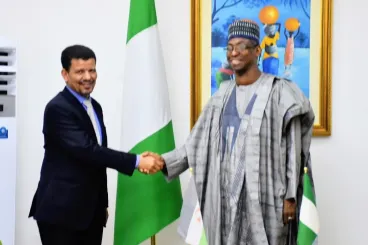
A Spanish think tank has stated in its analysis that the Western Sahara conflict is moving toward a resolution, asserting that Algeria will not be able to withstand pressure from the administration of U.S. President Donald Trump. It also recommended that the European Union clarify its position and step up its diplomatic efforts to avoid being sidelined.
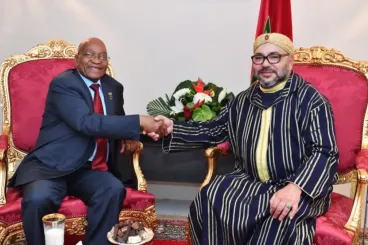
In South Africa, the third-largest political force in the lower house has expressed its support for Morocco’s sovereignty over Western Sahara. On this issue, President Cyril Ramaphosa’s party appears increasingly isolated, as the Democratic Alliance—representing the white minority—has shown little enthusiasm for supporting the Polisario.
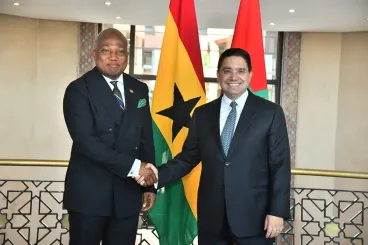
On his first official visit to Morocco since taking office, Ghana’s Minister of Foreign Affairs, Samuel Okudzeto Ablakwa, was received in Rabat on Thursday by his Moroccan counterpart, Nasser Bourita. In a historic move, Accra voiced its support for Morocco’s autonomy plan for the Sahara. This political alignment marks a deepening of bilateral cooperation across several sectors, beginning with the facilitation of the movement of people and services.
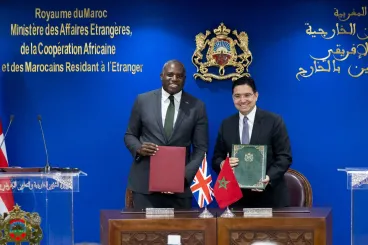
Ghanaian Foreign Minister Samuel Okudzeto Ablakwa was received in Rabat by his Moroccan counterpart, Nasser Bourita. On Thursday, the two ministers signed a memorandum of understanding on political consultations and a joint communiqué in which Ghana voiced support for Morocco’s autonomy plan for the Sahara, calling it the «only realistic and sustainable basis» for a mutually acceptable solution.
Days after supporting Morocco’s 2007 autonomy plan for Western Sahara, Algerian media claimed the UK reverted to neutrality based on a new statement emphasizing UN-led resolution and self-determination. However, the UK government’s official statement confirmed its endorsement of Morocco’s autonomy proposal as the most credible basis for a lasting solution.
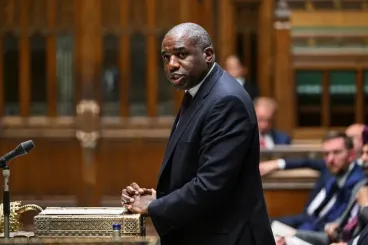
Following his visit to Rabat, UK Foreign Secretary David Lammy informed Parliament of his department’s endorsement of Morocco’s autonomy plan as the most credible solution to the Western Sahara conflict, emphasizing that it «advances regional security, stability, and prosperity».
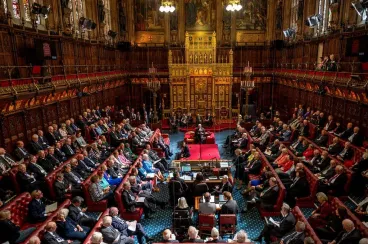
UK politicians from both the Conservative and Labour parties have welcomed the government’s decision to back Morocco’s autonomy plan for Western Sahara. They praised the move as a significant step forward for UK-Morocco relations and called for further collaboration across key sectors.
A new permanent member of the United Nations Security Council has just shifted its stance on the Western Sahara issue. The United Kingdom, which had previously maintained a neutral position, has now announced its support for the Moroccan autonomy plan. This significant change highlights the growing positive momentum of Moroccan diplomacy.
 Les articles les plus...









 chargement...


![Trump’s return and pressure on Algeria could end Sahara conflict [Spanish Institute]](https://static.yabiladi.com/files/articles/yabiladi.09938f2c3de608911003bef52997a29b20250612192215chaabi-.webp)

![Algerian media claim UK reversed its stance on Western Sahara to neutrality [Fact Check]](https://static.yabiladi.com/files/articles/yabiladi-de6694d2c98725c558ce72055cb4dacb20250604193330chaabi-.webp)