The Algerian army’s intervention on February 4, in Ksar Ich, in the province of Figuig, is the latest in a series of incidents that call into question the relevance of the 1972 agreement. That accord, signed by Morocco and Algeria to delineate their land borders, is frequently invoked by Algiers whenever territorial disputes arise in the region.
A newly discovered spyware campaign, dubbed LANDFALL, has been targeting Samsung Galaxy users in Morocco and beyond, exploiting a zero-day vulnerability in WhatsApp's image-sharing feature to infiltrate devices without user interaction. Uncovered by Palo Alto Networks' Unit 42, this advanced malware has been active since mid-2024, allowing attackers to conduct extensive surveillance before Samsung's recent patch in 2025.
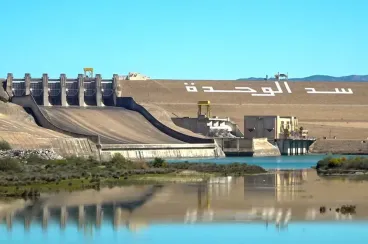
A new study warns that Morocco’s Al Wahda Dam, located in the seismically active Rif Mountains, faces a 100% probability of at least one moderate earthquake (≥4 Mw) within the next 25 years. The forecast is based on a newly developed probabilistic modeling framework used by researchers to assess seismic risk.
Morocco ranks 124th out of 188 countries in the new climate vulnerability index by the Columbia Climate School, which measures exposure to climate risks alongside financial capacity to respond. The index highlights significant challenges across the region, with many African countries, facing urgent needs for targeted climate funding to build resilience.
After taking credit for an unprecedented cyberattack on the CNSS, the Algerian hacker group Jabaroot announced Monday a new Moroccan target, the National Agency for Land Conservation, Cadastre, and Cartography (ANCFCC). This time, tens of thousands of sensitive documents have been leaked on the dark web, exposing the inner workings of Morocco’s cadastral system as well as the personal data of numerous prominent figures.
A new map of multidimensional poverty in Morocco, released by the High Commission for Planning, reveals a significant decline in the poverty rate, from 11.9% in 2014 to 6.8% in 2024. Despite improvements across all regions, spatial disparities remain marked, particularly between urban and rural areas.
 Les articles les plus...









 chargement...