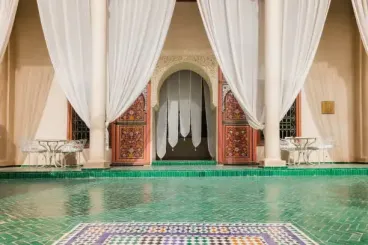
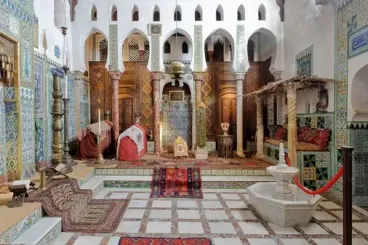
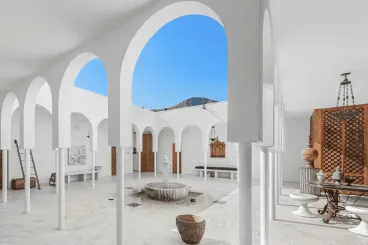
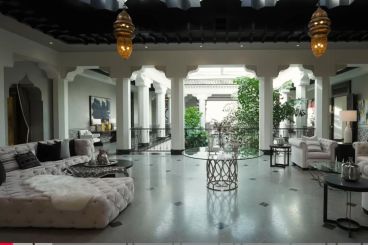
Marrakech is rich in history and culture, with stunning palaces, gardens, and museums to explore both inside and outside the medina. This guide highlights the city’s must-see sites, including iconic riads, the Majorelle Garden, the YSL Museum, and the Mohammed VI Museum for Water Civilization.
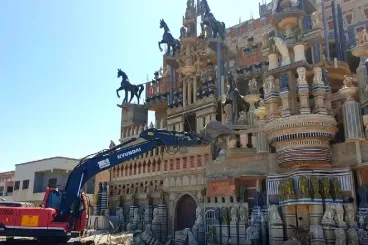
Salé authorities began demolishing the iconic but unofficial landmark of the city «Villa Seboua», sparking protests from the owner’s family. Human rights groups supported the demolition, calling it a crucial step to enforce building laws and promote fair urban planning.
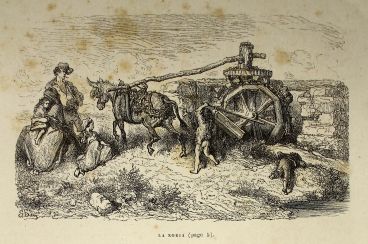
Water transportation across Caliphal Andalusia was shaped by innovative pipeline systems. Between the 8th and 15th centuries, water supply was ensured through public fountains, underground canals known as qanats, and public baths. Islamic architecture and Andalusian art not only integrated water into enclosed spaces for practical use but also elevated it as a symbolic element—allowing gardens to thrive and reflecting the abundance and richness of the land.
A historic and intercultural bridge between Spain and Morocco, the city of Tetouan has never been portrayed with as much brilliance and scientific rigor as by the art historian and urban planner Mostafa Akalay Nasser. A lecturer at the Euro-Mediterranean University of Fès, the researcher has just published «La ville nouvelle de Tétouan (1860–1956)» in French with Sochepress, supported by the CCME and UPF.
 Les articles les plus...









 chargement...