


 chargement...


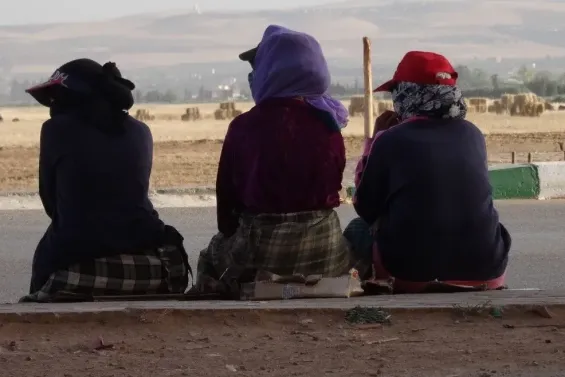
An analytical report on the statistical profile of NEETs in Morocco, young people not in employment, education, or training, reveals that their number among those aged 15–29 stands at 2.9 million, with women and girls accounting for 72% of this total. Nearly three-quarters of this group have no qualifying diploma, while almost half are aged 25–29, a critical stage in the transition from education to employment, highlighting the difficulties young people face in entering the labor market.
Produced by the High Commission for Planning (HCP) in partnership with the International Labour Organization (ILO) and the European Union (EU), the report draws on national employment surveys and aims to «refine the understanding of the profiles and trajectories» of this population. It highlights significant territorial disparities, with NEET rates ranging from 28% to nearly 40%, and a higher prevalence in rural areas than in urban ones.
The paradox of diplomas
The HCP stresses that these findings call for «responses tailored to local contexts, based on a nuanced understanding of realities». The institution also aims to «strengthen the use of national statistics to inform public policy», particularly in relation to employment and youth-focused strategies.
According to the report, the NEET rate in Morocco reached 33.6% in 2023 and «remains persistent, even during periods of economic recovery», after standing at 33% in 2022. The issue is considered «central to the priorities of the New Development Model» and to achieving Sustainable Development Goal 8.6, which targets a reduction in the proportion of young NEETs.
Econometric analysis confirms that «education is the most powerful barrier against inactivity». «A higher diploma significantly reduces the risk of exclusion for young women». However, the report highlights a paradox: for young people actively seeking work, mostly men and fewer in number than the inactive group, holding a diploma, particularly from vocational training, can increase the risk of long-term unemployment.
This reflects a mismatch between education and labor market realities, where «the diploma creates aspirations that the labor market fails to satisfy», turning the job search into a «trap» of precariousness.
The risk of being NEET rises sharply after age 24, increasing from 25.6% among those aged 15–24 to 50.2% for those aged 25–29, illustrating a «tipping point» between leaving education and accessing employment.
The report also notes that «marriage and the presence of young children are key factors that significantly increase the likelihood of young women becoming inactive».
A deeper social issue
For sociologist Hakima Laala, professor at Hassan II University in Casablanca, these figures reflect a broader «lack of life capital» affecting part of Moroccan society. Speaking to Yabiladi, she points to the impact of dysfunctional family environments and broader social conditions that foster violence and lead to various forms of «dropout».
She describes a cycle in which «minors experience violence at home, leave, encounter and reproduce violence in the street, become incarcerated, and ultimately drop out of life altogether». She also highlights the role of drugs, delinquency, prostitution, and entrenched gender norms in exacerbating vulnerability.
Rather than speaking of vulnerable families, Laala refers to «dysfunctional households whose structure carries multiple forms of violence», making it difficult to provide stable support for children.
She also emphasizes that «the combination of poverty, precariousness, and a lack of parental support limits the ability to ensure proper development», while violence within schools further contributes to dropout, creating a «multiplier effect» that reinforces exclusion.
Limits of current responses
Laala questions certain societal norms, including «the perception of violence as an acceptable or even positive educational value», and calls for a reassessment of public policies aimed at supporting young people.
According to her, when such dynamics become embedded in both households and schools, they lead to the emergence of what she describes as a «zero-capital category», young people deprived of the resources needed to build a future.
More broadly, she points to «a loss of hope among young people», who face limited prospects and risk reproducing the same conditions, with long-term consequences for their life trajectories.





 Fil Info