


 chargement...


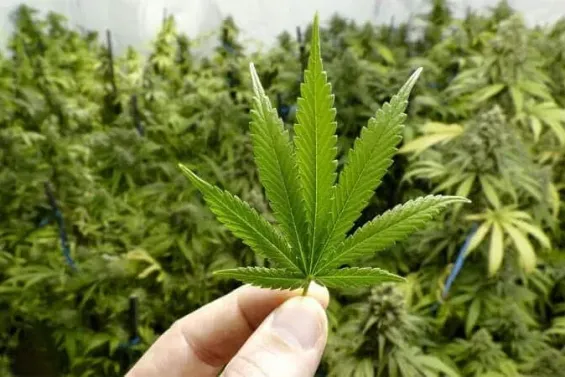
The newly released World Drug Report 2026 by the United Nations Office on Drugs and Crime (UNODC) points to a decline in Morocco's role in the global cannabis resin trade, as new suppliers emerge and the characteristics of Moroccan cannabis evolve.
In 2024, global cannabis resin seizures fell to their lowest level since 2011, with most seizures recorded in Western and Central Europe, North Africa and South-West Asia. While cannabis is cultivated in almost every country and herbal cannabis trafficking remains largely regional, the report notes that international supply chains have become increasingly diversified. Based on data reported by member states, the share of countries identifying a source from within the same subregion reached its lowest level on record in 2024.
Long considered one of the world's main producers of cannabis resin alongside Afghanistan and the Netherlands, Morocco has seen its prominence gradually diminish. UNODC data show that between 2010 and 2016, Morocco was among the principal sources of cannabis circulating through international trafficking networks. The number of countries identifying Morocco as a source peaked between 2014 and 2016, when 15 to 16 countries reported the kingdom as the origin of seized cannabis resin, the highest level recorded during the period covered by the report.
A qualitative shift: rising potency
The trend began to reverse in 2017. Since then, the number of countries identifying Morocco as a source has steadily declined, reaching its lowest level in 2024. According to the report, this reflects Morocco's reduced role as a major supplier of cannabis resin on international markets.
At the same time, other producers have gained prominence. The report highlights the growing role of the United States and Canada, which have been increasingly identified as countries of origin for cannabis, particularly since 2018.
While Morocco's international market share has declined, the report also identifies a significant change in the product itself. Moroccan cannabis resin has become considerably more potent since the late 2010s, mirroring trends observed in the United States and the European Union, where THC concentrations have increased while CBD levels have fallen.
According to the UNODC, this shift is driven by the adoption of more potent cannabis varieties through genetic selection, combined with more advanced cultivation techniques. The report notes that the trend first emerged in the Netherlands in the early 2000s before spreading to Moroccan production. It warns that higher THC concentrations are associated with greater risks of adverse psychological effects, dependence and addiction.





 Fil Info