


 chargement...


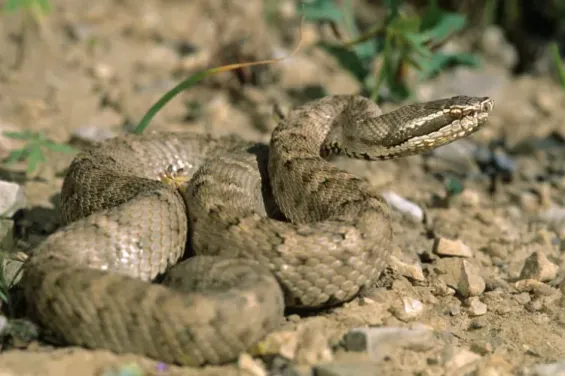
Summer in Morocco does not only bring soaring temperatures. It also marks the period when the risk of scorpion stings and snake bites reaches its highest level of the year, prompting health authorities to step up prevention efforts as thousands of cases are recorded annually across the kingdom.
According to figures shared with Yabiladi by the Moroccan Poison Control and Pharmacovigilance Center (CAPM), 20,583 cases of scorpion stings and envenomation and 358 snake bites were reported in 2025. While scorpion stings account for the overwhelming majority of incidents, snake bites remain far more dangerous, with a fatality rate of 4.4%, compared with 0.13% for scorpion envenomation.
«The majority of scorpion stings are mild (90% of cases), but some, particularly in young children, can develop into severe forms requiring urgent medical care», CAPM told Yabiladi.
Heat, human activity and wildlife
The seasonal increase is not only driven by rising temperatures. According to CAPM, it is the combination of warmer weather and increased human activity that creates the perfect conditions for encounters with venomous animals.
During the summer months, agricultural work intensifies while more people venture into rural areas, mountains and fields. At the same time, snakes emerge from hibernation and become significantly more active.
«After hibernation, snakes are more active. Their movements are driven by hunting, reproduction, thermoregulation and the birth of young, causing them to leave their shelters more frequently», the center explained.
The regions most exposed
Although scorpion stings are reported across almost the entire country, some regions are particularly affected. According to CAPM, Marrakech-Safi, Souss-Massa, Béni Mellal-Khénifra, Casablanca-Settat, Drâa-Tafilalet, Fès-Meknès and Tangier-Tétouan-Al Hoceïma consistently record the highest numbers, owing to climatic and environmental conditions favorable to scorpions.
Snake bites, meanwhile, occur mainly in rural and mountainous areas, with Tangier-Tétouan-Al Hoceïma, Souss-Massa, Béni Mellal-Khénifra, Fès-Meknès, Drâa-Tafilalet, Rabat-Salé-Kénitra and Marrakech-Safi among the regions most exposed.
Prevention before treatment
While Morocco has significantly reduced deaths linked to scorpion stings and snake bites since launching its national envenomation strategy in 2001, health authorities insist that prevention remains the most effective protection.
«The best protection remains prevention, as a few simple measures can significantly reduce the risk of scorpion stings and snake bites», CAPM said.
This year's National Week for the Prevention and Control of Scorpion and Snake Envenomation was launched in Kelaâ des Sraghna, one of the provinces most affected by the phenomenon. Beyond public awareness campaigns, the ministry has strengthened the training of healthcare professionals, updated treatment protocols, reinforced epidemiological surveillance and monitored antivenom stocks in high-risk areas.
The center advises wearing closed shoes when walking in rural or mountainous areas, avoiding going barefoot, particularly at night, checking shoes and clothing before use, keeping the surroundings of homes free of debris where scorpions and snakes may hide, and paying particular attention to children, who are the most vulnerable to severe envenomation.
The CAPM's final message is straightforward: «Prevent, seek medical care quickly and avoid inappropriate first-aid practices. These three reflexes save lives and reduce the risk of complications».
According to the Moroccan Poison Control and Pharmacovigilance Center:
Do:
- Go immediately to the nearest health center or emergency department.
- Keep the victim calm and limit movement.
- Immobilize the affected limb if possible.
- Remove rings, bracelets or tight objects if swelling occurs.
Do not:
- Cut or suck the wound.
- Apply a tourniquet.
- Use traditional remedies, herbs or chemicals.
- Attempt to catch or kill the snake.
CAPM emergency hotline (24/7):
0801000180
0537686464



 Fil Info