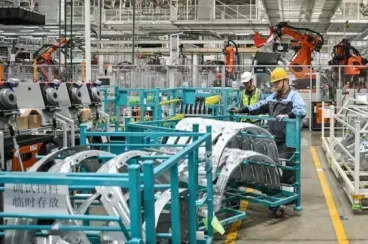
Concern is mounting within the European Union over the expansion of Chinese industrial investment in Morocco, amid fears that the kingdom could become a manufacturing and export hub for subsidized Chinese products destined for the European market.
A new ESCWA brief warns that new U.S. tariffs threaten $22 billion in Arab non-oil exports, with Morocco, Egypt, Jordan, and Tunisia facing $114 million in additional sovereign interest payments in 2025. Moroccan exports, however, may benefit from shifting U.S. trade dynamics, gaining ground as Chinese and Indian goods face higher tariffs.
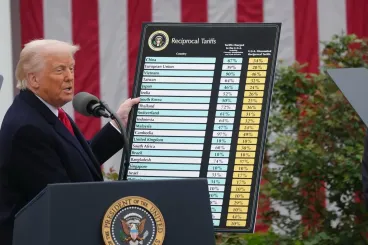
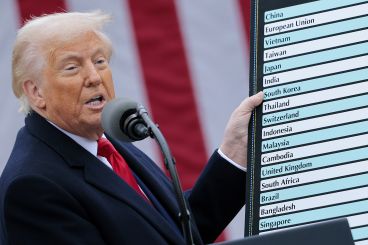
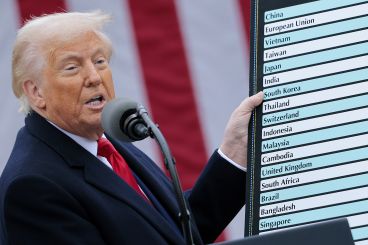
President Trump announced a 10% baseline tariff on imports to the U.S., which could further impact the already imbalanced trade between Morocco and the U.S. In 2024, the U.S. trade surplus with Morocco reached $3.4 billion, a significant increase from $35 million in 2005, one year after the signing of a Free Trade Agreement.
President Donald Trump announced new global reciprocal tariffs, imposing a 10% duty on Moroccan goods. Despite the U.S.-Morocco Free Trade Agreement, this measure could impact key sectors like agro-food and textiles.
 Les articles les plus...









 chargement...