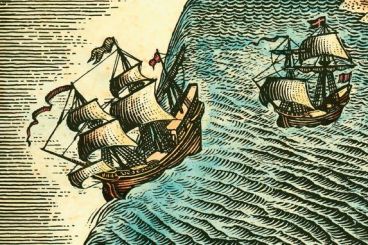
Way before Man stepped on the moon and gazed afar at our planet, Muslim scholars knew that the Earth was round. While many people still think that the Earth is flat, several Arab scientists tried to prove the opposite, years before this realization dawned on Galileo.
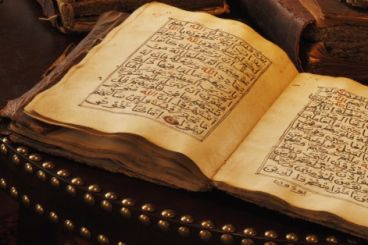
In the 1700s, American statesman Thomas Jefferson purchased a copy of the Quran. Historical records suggest that the third President of the US bought the book as a law student while others say he studied it to better understand his Muslim enemies in North Africa.
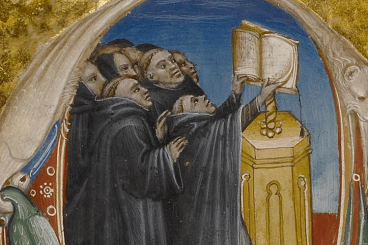
During the 12th century, French abbot Peter the Venerable tried to introduce Islam to Christians in Europe through a book that ridiculed the religion. In his summary book, Peter gave an erroneous image of Islam, portraying it as a heresy.
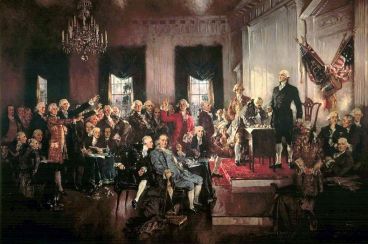
Discussions about Islam and Muslims were part of the United States’ history since the the country’s founding. America’s Founding Fathers were the first to accept the religion and declare that they «have no enmity against it».
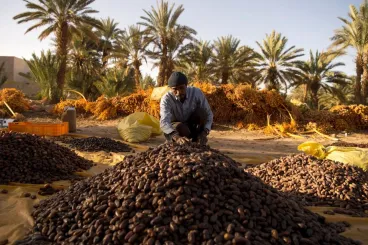
Although the Mejhoul date originates from Morocco’s Tafilalet Valley, the variety spread worldwide after 11 offshoots were taken to the United States in the 1920s, leading to large-scale cultivation in countries such as the United States, Israel, Mexico, and Jordan. Today, these countries dominate global production.
British lawyer George Sale was the first man to conduct a direct English translation of the Quran. His 1733 translation contained notes and an interpretation of Muslims’ manners and laws.
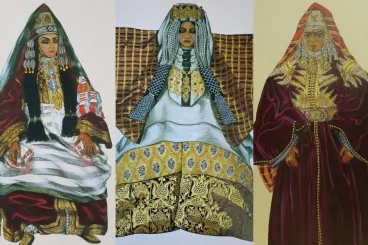
Once a staple of urban attire, the Moroccan caftan is now worn on all special occasions. Recognizable by its long cut, intricate embroidery, refined fabric, and golden belt, this garment has evolved from the 11th and 12th centuries to the present day, earning its place on the high-fashion runway. Telling a story in motion, it has become a cherished fashion piece for religious celebrations, Ramadan evenings, or family gatherings.
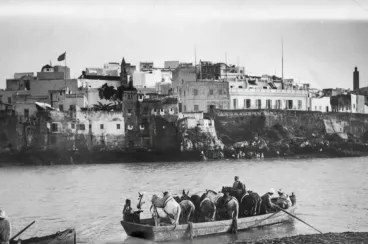
For centuries, the Loukkos River has been both a lifeline and a recurring threat, causing repeated floods that have shaped settlements from ancient Lixus to modern Ksar El Kebir. Despite river diversions and dams, major floods have continued into the 20th and 21st centuries, showing that the risk has never fully disappeared.
 Les articles les plus...









 chargement...