


 chargement...


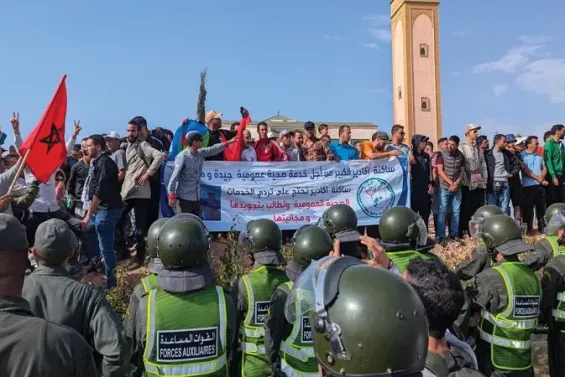
The wave of dismissals at the Ministry of Health continues. After removing the regional health director of Souss-Massa and the provincial delegate of Agadir Ida-Outanane in response to protests over deteriorating conditions at Agadir’s Hassan II Regional Hospital, Health and Social Protection Minister Amine Tahraoui on Monday dismissed the director of Azemmour’s local hospital, according to Assabah.
These decisions come amid a surge of protests across several Moroccan cities denouncing the crisis in public hospitals. Demonstrators cite the lack of basic services, long waiting times for appointments, shortages of medicines and equipment, and weak infrastructure as evidence of systemic decline.
What began in Agadir quickly spread to Nador and Driouch, before reaching Taounate, Essaouira, Meknes, Beni Mellal, Settat, Tiznit, and Tata. In some cities, demonstrations were banned, with reports of arrests among participants, according to the Moroccan Association for Human Rights.
Dismissals seen as temporary fixes
Human rights groups active in healthcare argue that dismissals are only temporary measures that fail to address the roots of the crisis. The Moroccan Organization for Nursing and the Right to Health told Yabiladi that the healthcare system «suffers from structural dysfunctions in management, organization, and human resources, compounded by officials lacking the competence to hold managerial posts». The group stressed the need to rethink the ministry’s budget, given the sector’s strategic importance.
Citing Framework Law No. 06.22 on the national healthcare system, the organization underlined that the ministry and its officials «must engage with these protests, which clearly reflect citizens’ frustration with the decline in health services». Secretary-General Ayoub Zine added that demands should be «addressed objectively and comprehensively, with reforms that go beyond stopgap measures».
A severe nursing shortage
Zine noted that the public’s anger was predictable given the scale of problems facing Morocco’s health sector. According to 2022 figures, Morocco has 37,376 nurses and midwives across various specialties, including therapists and health technicians, less than 15 per 10,000 inhabitants. The World Health Organization recommends a minimum of 60 per 10,000 to guarantee quality care.
He warned that this shortage often «forces Moroccan nurses to take on the workload of four colleagues, undermining service quality, even as many graduates of higher nursing and health technology institutes remain unemployed».
Despite these challenges, the Moroccan Organization for Nursing and the Right to Health expressed cautious optimism about the creation of territorial health groups, which could become a lever for improvement, provided that governance standards are strengthened in regional management and in the administration of healthcare institutions, where deficiencies in oversight and quality assurance remain widespread.





 Fil Info