


 chargement...


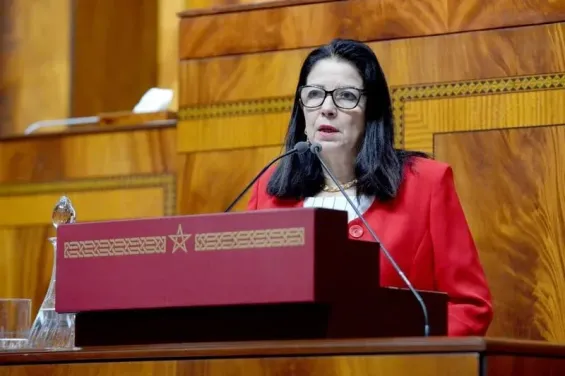
The Moroccan government is stepping up its announcements in response to the demands raised by Generation Z protesters. On Tuesday, October 13, at the House of Representatives, Minister Delegate for Digital Transition and Administrative Reform, Amal El Fallah Seghrouchni, announced that the government is preparing a new national anti-corruption strategy.
This initiative, she explained, is based on an assessment of the previous strategy, conducted in collaboration with the National Authority for Integrity, Prevention, and the Fight against Corruption (INPPLC) and civil society partners. The minister also revealed that the government, in coordination with the INPPLC, intends to adopt transparency perception indices developed by the OECD (Organisation for Economic Co-operation and Development).
Morocco ranked 99th by Transparency International
El Fallah Seghrouchni justified this decision by pointing to the limitations of the Corruption Perceptions Index (CPI) published by Transparency International, which she said «does not reflect the government’s efforts in this area». She added that the OECD indicators rely on «verified and reliable data sources validated by national governments».
During the same session, members of the Justice and Development Party (PJD) recalled that Morocco ranks 99th in Transparency International’s 2024 CPI, a position they argued costs the country 50 billion dirhams annually, equivalent to building 12 university hospitals and 2–3% of national growth.
«This government has not made the fight against corruption a priority», said PJD MP Abdessamad Haiker, criticizing the executive for failing to convene the National Anti-Corruption Commission, withdrawing bills on illicit enrichment and public space occupation, and neglecting to pass a law on conflicts of interest. «You’ve even shielded corruption from civil society complaints under the new criminal procedure code, particularly in articles 3 and 7», he added.
Haiker further accused the government of pursuing policies that «not only mobilized the inhabitants of Aït Bouguemez but also angered internet users», warning that such policies «threaten the country’s security and stability».
In response, Mohammed Chouki, president of the RNI parliamentary group, reminded lawmakers that the last meeting of the National Anti-Corruption Commission dates back to 2017, under the government of Saad-Eddine El Othmani (PJD). His remarks provoked an uproar from PJD MPs before calm was restored. Chouki urged the government to involve Parliament in shaping the new national anti-corruption strategy.
In his speech before Parliament on October 10, King Mohammed VI called for «social and territorial justice». The fight against corruption remains one of the central demands of Generation Z protesters in Morocco.





 Fil Info