


 chargement...


More than a festive expression of connection to the land, the Amazigh New Year (Yennayer) is one of the clearest illustrations of how the values of sharing and coexistence, at the heart of Moroccan culture, are passed down. Rooted in ancestral rites and artistic expressions that celebrate collective life, it reflects an open and inclusive sense of belonging. Elevated to the status of a national holiday in May 2023, it embodies an enduring heritage, both a historical witness and a vehicle for a diversity deeply woven into the country’s DNA.
Long before its official recognition, this millennia-old celebration was often traced to the enthronement of the Amazigh Pharaoh Sheshonq I in 950 BC, a date commonly cited as the starting point of the Amazigh calendar. The same cycle also corresponds to what is known as the agrarian year, or the «Agricultural New Year». In both cases, the celebration is about cherishing shared cultural values, as well as the symbols of abundance they generate: the nurturing land, a source and engine of life, and a collective space where the fruits of labor are harvested in recognition of everyone’s contribution.
A celebration that tells the cultures of the country
Mustapha Marouane, a researcher in Amazigh culture at Sidi Mohamed Ben Abdellah University in Fès and curator of the House of Orality (Tigmmi N Wawal) in Aït Ben Haddou (province of Ouarzazate), explains to Yabiladi that «with the emergence of agriculture in North Africa dating back more than 5,000 years, the celebration is primarily agricultural and begins at the start of each new agrarian season». «It is possible that during the Roman presence in North Africa, the Amazigh adopted the ancient Roman calendar (Julian), which differs from the current Gregorian calendar by 13 days».
«This is why January 14 corresponds to the first day of the Amazigh New Year today», he emphasizes. He adds that «the choice of the date 950 BC remains technical and symbolic». In any case, it serves as a marker through «a major historical event, which serves as a numerical starting point, even taken up by Ammar Negadi (Chaoui)». An Amazigh activist born in the Batna province (Algeria), Negadi authored the first Amazigh calendar in 1980, in a context where the Agraw Amazigh Academy (1968–1978) worked to celebrate the Amazigh New Year while also adopting 950 BC as a reference.
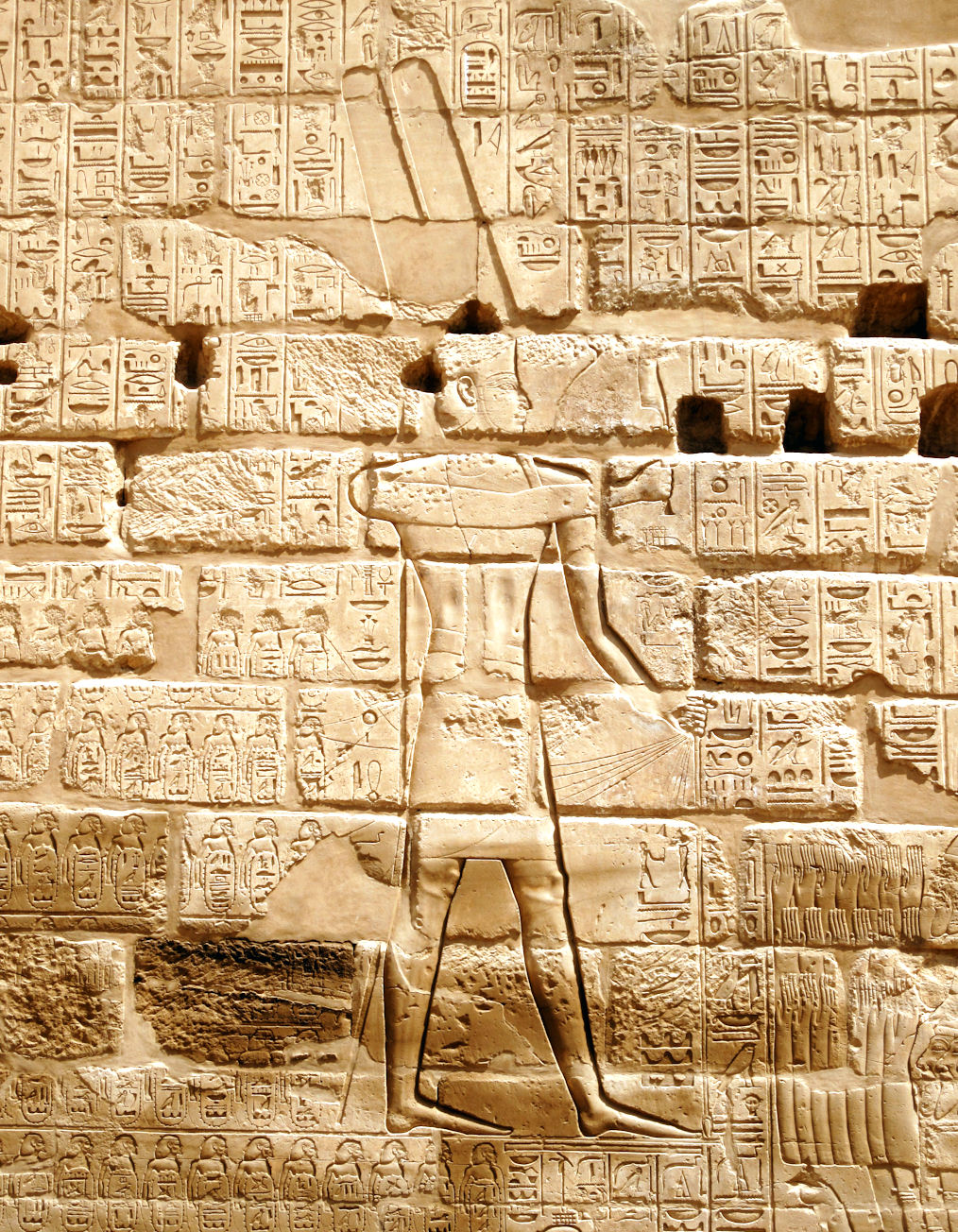 Representative engraving of Sheshonq I at Karnak / DR
In this regard, Mustapha Marouane specifies that «the Amazigh calendar is not associated with any religious event: it predates the Christian, Gregorian, and Muslim Hijri calendars». Thus, although it has only been officially celebrated since January 2024 in Morocco, Yennayer has long been commemorated within communities, in families, and later through associations, beyond the historical debate over its precise origins.
Anthropologist Lahoucine Bouyaakoubi describes this dynamic, noting to Yabiladi that «in all societies with a long history and rich oral culture, accompanied by traditions and rites, many practices disappear due to the changes and transformations that societies undergo, but some endure and manage to renew themselves, finding a place in ‘modern’ society; this is the case with Yennayer».
Traditions preserved in the regions
A professor at the Faculty of Letters and Human Sciences (FLSH) – Aït Melloul, part of Ibn Zohr University in Agadir, and director of the interdisciplinary laboratory of languages and artistic and social dynamics (LILDAS), Lahoucine Bouyaakoubi recalls that, «different from the Hijri, Gregorian, and Hebrew calendars, all present in Morocco», the Amazigh year has long been «linked to the agricultural life of Moroccans, bearing several names depending on the regions».
Safia Azedine, a Moroccan poet and author of numerous Amazigh collections documenting ancestral celebrations and popular rituals in predominantly Amazigh-speaking regions, tells Yabiladi that Yennayer «embodies an entire way of life», especially in her region of Ouarzazate. «Here, we celebrate it in the same way for generations, starting from January 13, with the night marking the transition to the new year», she says.

During the three days preceding the New Year, «the villagers gather wood and begin distributing wheat, corn, and other seeds, so that everyone exchanges goods in preparation for tagoula, this essential porridge for the collective Yennayer banquet», Safia Azedine adds. In her region, many of the customs associated with Yennayer highlight openness, sharing, and good neighborliness, often accompanied by sung poems passed down through oral tradition.
«The doors of the houses remain open, symbolically to welcome the good fortune of the new year. The evident link between Yennayer and the agrarian year is illustrated by the fact that New Year’s Day marks the end of a month when farmers do not irrigate their land. Once this period is over, the collectively gathered wood is used to light a fire, which goes out when the surface temperature becomes suitable for new plantations, heralding an agricultural season that everyone hopes will be abundant».
Drawing on her work documenting oral culture, Safia Azedine stresses that «contrary to some erroneous ideas that associate these rituals with certain pagan beliefs, it must be said that the practice is rather influenced by ancient agricultural traditions, deeply rooted in local and regional civilizations».
Other practices marking the transition into the Amazigh New Year include the essential Ahwach dance, as well as «beryalou», the collective collection of goods on January 14, followed by the preparation of taghounja the next day.

A foundation of common traditions adapting to space and time
The poet says that after years of working on the sung poems of these tribes, «it turns out that many have long been made of divine invocations, through which community members implore the almighty God to make their agricultural season prosperous thanks to a salvific rain that will lay the groundwork for an abundant harvest».
«It is a beautiful illustration that invites us to reflect on the diversity of our national culture. We complement each other, and Yennayer belongs to all Moroccans, as do the traditions of the Rif, as does the Hassani tributary, and as do all the heritages that make up this beautiful mosaic in which each of us can find ourselves».
Lahoucine Bouyaakoubi believes these traditions have preserved their essence while adapting to social change to retain their national cultural symbolism. «This practice, in its traditional forms, exists in all Moroccan regions without distinction, among both Arabic speakers and Amazigh speakers», he says. He adds that before official recognition, «the Amazigh Movement has the merit of revaluing this tradition and giving it another meaning and another role in society».
More broadly, beyond the family or community sphere, the researcher notes that «it is from 1991 that Amazigh associations celebrated this calendar as a marker of the New Year, in youth centers, associative premises, then later in large party halls, before investing public squares from 2011», following the constitutional reform that enshrined Amazigh as an official language of Morocco alongside Arabic.
 Ph. Nadia Ben Mahfoudh / RFI
The anthropologist explains that «the calendar defining Yennayer has paced the lives of farmers», and that «if this function still exists in the rural world, the calendar itself has taken on another dimension among today’s youth, particularly in cities». «It is linked to Amazigh identity and has been named the Amazigh New Year, recognized, by a royal decision, as a public holiday since 2023», he says.
Today, the celebration «manifests in other ways: conferences, artistic evenings, presentations of Amazigh gastronomy, festivities for children...» According to Lahoucine Bouyaakoubi, «it is a break in terms of representations, but a continuity embodied in the festivities, which still rely today on a very ancient heritage».





 Fil Info