


 chargement...


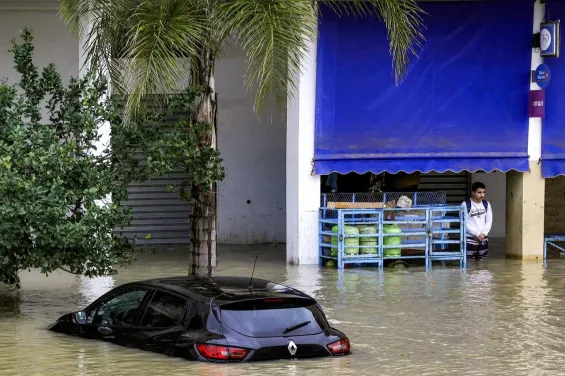
Larache, Kenitra, Sidi Kacem, and Sidi Slimane have been declared as disaster-stricken areas after flooding that caused evacuation and material damage. The announcement paved the way for a support and assistance program with an estimated budget of 3 billion dirhams to help the affected population.
The flood support plan allocates 775 million dirhams for rehousing, income loss, and the rehabilitation or reconstruction of damaged homes and small businesses; 225 million dirhams for emergency and in-kind aid; 300 million dirhams for farmers and livestock breeders; and 1.7 billion dirhams for the rehabilitation of road and hydro-agricultural infrastructure and basic networks.
At the core of the plan is direct financial aid: up to 6,000 dirhams per affected family, 15,000 dirhams for damaged homes and small businesses, and 140,000 dirhams for collapsed houses. Emergency payments, expected to begin next week, require heads of households to send an SMS to 1212 with their national electronic ID (CNIE) number and date of birth for verification.
Rehabilitation and reconstruction requests will be assessed on-site by specialized commissions in the declared disaster areas. In parallel, farmers will benefit from a spring planting program covering oilseed, cereal, and forage crops, including support for seeds and fertilizers, alongside continued assistance for livestock breeders.
Cars affected by the floods
Another form of compensation is available to residents who had insured their cars and homes prior to the floods.
In Morocco, all vehicle owners are legally required to take out mandatory third-party liability insurance (RC), which covers bodily injury and property damage caused to others. This formula does not cover damage to the driver or the insured vehicle itself, even if it is caused by a natural disaster such as floods. To benefit from flood coverage, car owners must add optional guarantees, such as comprehensive (“Tous Risques”) insurance.
An insurance policy with a flood coverage option covers damage caused by abnormal water events such as:
• Heavy runoff water
• Sewer backup
• Flooding rivers
• Storm tides
• Moving snow or ice
In the event of water damage, the claim must be reported within 5 working days. In the case of a natural disaster, car owners have 10 days from the official announcement of the disaster to file their claim. This deadline starts from the moment the insured becomes aware of the damage, not from the date the incident actually occurred.
However, insurers advise users to strictly follow certain procedures when their vehicle is damaged by water or inundated. After reporting the claim, the policyholder must provide policy details, a clear description of the incident, and photos or videos taken before moving the vehicle, along with a police report if applicable. No repairs should be carried out until an expert appointed by the insurer has assessed the damage, as unauthorized repairs may void compensation.
Home inssurance and floods
Homes are also covered against natural disasters. In Morocco, the EVCAT guarantee has been mandatory since 2020, covering the consequences of catastrophic events. Although home insurance itself is not mandatory in Morocco, except when required by a bank as part of a mortgage agreement, EVCAT remains legally mandatory within any home insurance contract.
EVCAT applies to residential, commercial, and industrial buildings and also covers household contents (furniture and personal belongings inside the home).
Covered events include:
• Floods (including runoff, overflowing rivers, rising groundwater, dam failure due to natural causes)
• Mudslides
• Earthquakes
• Tsunamis
• Acts of terrorism
• Riots or popular movements of serious intensity
However, the event must be officially declared a «catastrophic event» by decree of the Head of Government to trigger compensation, as in the case of Ksar El Kebir and surrounding provinces.
• The insured must notify their insurer within 20 days.
• The insurer assesses the damage.
• The insurer proposes compensation within 60 days.
• Payment is made after acceptance.
According to ACAPS, the Moroccan authority responsible for regulating insurance and reinsurance companies, compensation under EVCAT is subject to deductibles (franchises) and legal caps (maximum amounts). For example, the cap for a residential building is 2,000,000 dirhams, and for household contents 400,000 dirhams.
For the record, the exceptional rainfall in northern Morocco has flooded more than 110,000 hectares and displaced nearly 188,000 people.



 Fil Info