


 chargement...


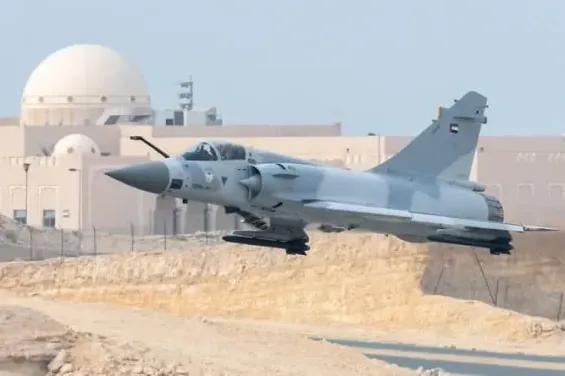
Morocco will have to wait longer to receive the 30 Mirage 2000-9 jets promised by the United Arab Emirates in 2022, following the warming of bilateral ties that began with the opening of an Emirati consulate in Laâyoune in November 2020.
After the lifting of the French veto in 2024, the donation project intended for the Royal Armed Forces (FAR) is now facing a new hurdle linked to the repercussions of the war in Iran. «The escalation of conflicts in the Middle East is further delaying the implementation of the agreement between Abu Dhabi and Rabat,» Africa Intelligence reported on Thursday.
In a tense regional context, Emirati authorities are prioritizing the maintenance of their operational fleet while awaiting the full delivery and integration of Rafale F4 jets.
The delivery schedule of the 80 Rafale F4 aircraft, ordered in December 2021, is central to this equation. Under the contract signed with France during Emmanuel Macron’s visit to Abu Dhabi, the first deliveries are expected from 2026, with full delivery projected by 2031. However, delays are common in such large-scale defense contracts.
Anticipatory measures amid regional tensions
Even before the recent escalation in the Middle East, the UAE had taken precautionary steps. On February 20, 2025, during the IDEX defense exhibition in Abu Dhabi, the Gulf Aircraft Maintenance Company signed a strategic partnership with a French group to ensure heavy maintenance of the M53 engines powering the Mirage 2000 fleet. The aim is to maintain optimal readiness ahead of their gradual withdrawal and planned transfer to Morocco by 2027.
The donation project dates back to late 2021, when the UAE expressed its intention to transfer 30 Mirage 2000-9E jets to Morocco following its order of 80 Rafale F4 aircraft, equipped with Mica NG air-to-air missiles and Black Shaheen cruise missiles, in a deal worth over €16 billion. The transfer was initially blocked by France amid diplomatic tensions with Rabat.
It was only in early 2024 that Franco-Moroccan relations began to ease, notably after the visit of then French Foreign Minister Stéphane Séjourné to Morocco in February. This rapprochement was further consolidated on July 30, when the French president recognized Morocco’s sovereignty over the Sahara.
Military cooperation between Morocco and the UAE is governed by a 2006 agreement covering training, exchange visits, and operational, technical, and logistical support. This partnership was expanded in 2014 to include cooperation in military industries and technology transfer.
During the 40-day conflict in Iran, King Mohammed VI held two phone calls with UAE President Mohamed bin Zayed to reaffirm Morocco’s support for its partner.



 Fil Info