


 chargement...


With the benefit of hindsight after 24 editions, as organizers, how do you view FICAM’s impact on young people?
One of FICAM’s core priorities is precisely young people. This year’s theme is «Young People Make Their Own Animated Films», something that has always been close to our hearts. One of the festival’s founding goals is, first and foremost, visual literacy, followed by training initiatives designed to help new talent emerge. After 24 editions, I can say that we are beginning to see the results of all the human and financial investment, as well as the passion with which we continue to carry this project forward.
In terms of visual literacy, we have developed a program mainly aimed at children aged 3 to 15, called «Cinema Is So Cool!». It is one of the festival’s major pillars. Through it, we offer a dedicated program for preschools, primary schools and middle schools, while reinforcing our commitment to highlighting young creators through screenings of short and feature-length films selected specifically for school audiences, young people and families.
The initiative is built around an original approach: preparing children ahead of their screenings by providing educational materials in advance. These resources are shared with schools so teachers can structure classroom discussions around the films. It is important to us that students know what themes and works they are about to discover. Questions are also prepared together with teachers so that students can reflect and provide feedback after the screenings.
This educational approach is central to our philosophy. Over time, we have clearly seen that this preparation helps young students understand whether or not they appreciate a film and, more importantly, how to think critically about its technique and content. From there, they also learn how to debate, which is very important to us because it indirectly encourages values such as tolerance, openness to others and acceptance of difference.
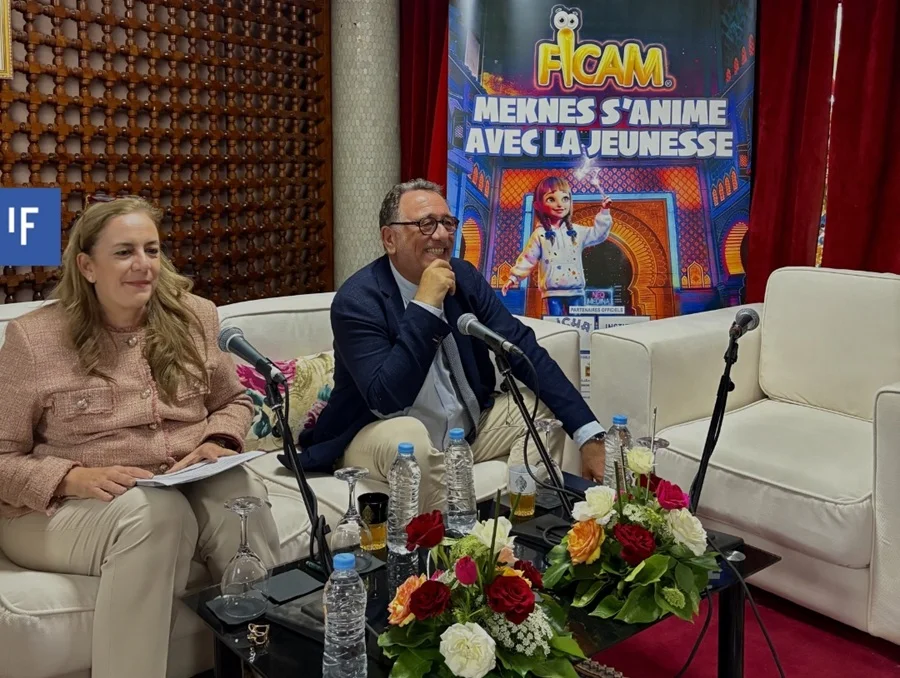
When it comes to young people, the second component is aimed at students in art schools. Every year, we offer training workshops focused on animation careers. These are professional modules that provide participants with certificates upon completion. The selection process is very rigorous. We make sure to involve the most motivated students through partnerships with schools and a jury that reviews the applications.
Continuing in this vein, in recent years the festival has included programming geared toward professionals. Tell us about the emergence of the Animation Film Careers Forum.
As part of FICAM, the Forum is now in its fourth edition, and we are very pleased with its development. It was created from the idea of establishing a platform for exchange alongside the festival, allowing students to connect with animation studios while enabling schools to engage directly with production companies and both national and international studios.
Today, we are proud to see that many projects have come to life thanks to this forum. For example, the Moroccan studios Neverseen and Artcoustic were able to secure several projects with TV5MONDE. This demonstrates that the event’s objective is truly to support the emergence of young talent and provide it with a genuine professional springboard.
In recent years, there has been real momentum around animated film, both at FICAM and beyond. The genre is now present in other major international film festivals in Morocco. Do you think FICAM has helped break down barriers by building bridges?
Absolutely. From the outside, and even internationally, animated film is often perceived as a niche genre. But over the years, beginning with FICAM, we have seen growing interest in animation in Morocco, whether among creators, programmers, broadcasters or organizers of other artistic events.
We are pleased that a major event dedicated to cinema, such as the Marrakech International Film Festival, has for several years now included animated films across its different sections.
In our view, this clearly reflects the enthusiasm surrounding the genre. As the Aïcha Foundation, we have also carried out extensive work with school audiences. Throughout the year, we organize tours across Morocco in partnership with the country’s main cinemas to showcase animated films. I believe all of this contributes to the positive momentum around visual literacy and the growing interest in animation.

We are also delighted that, over the past three years and with FICAM’s support, Moroccan television channels, namely the SNRT group and 2M, have committed to producing animated series rooted in Moroccan culture. Young viewers can now watch stories that reflect their country and their culture, particularly through «Maghariba Fi Samae» produced by Artcoustic studio.
In your view, does this confirm the role of animated film in making historical themes and subjects that may initially seem inaccessible more widely understood?
Animated film has long carried the label of being intended solely for children. But as Michel Ocelot so rightly says, it ultimately speaks to everyone and can therefore serve as a powerful vehicle for important messages that deserve to be shared.
Our hope is to see more and more animated series connected to Morocco, highlighting our culture, traditions and rich heritage through animation, and why not, one day, see a Moroccan animated feature film produced entirely in Morocco.





 Fil Info