


 chargement...


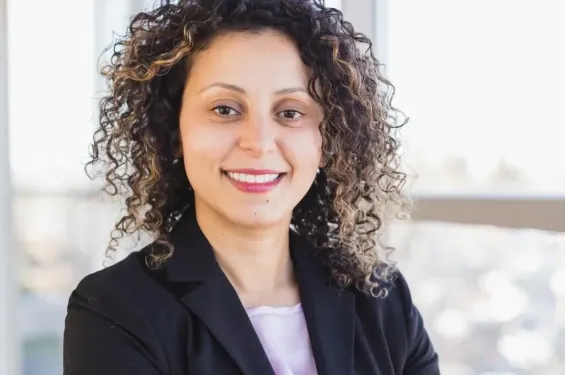
What do mechanical engineering, medical devices, supercomputers and artificial intelligence have in common? The answer lies in the career of Asmae Mhassni, a Moroccan engineer whose journey has taken her from Florida classrooms to the forefront of cybersecurity at Intel.
Today, Mhassni is a Principal Engineer at Intel, one of the company's highest technical ranks, and a co-lead of the AI Supply Chain Security workstream within the Coalition for Secure AI. Yet her path into technology was anything but straightforward.
Born and raised in Casablanca before moving to the United States with her family as a teenager, she was still discovering the American education system when she enrolled in community college in Florida. Initially, she chose a business major, uncertain about what direction to take.
Finding Purpose Through Engineering
Everything changed thanks to a professor. «One calculus professor, during my final semester, told me, 'I really think you should go into engineering.' His words had a huge impact on me, and I decided to pursue engineering», she told Yabiladi.
That decision led her to the University of South Florida, where she studied mechanical engineering. At the time, however, she had no clear vision of her future. «I was still searching for something that connected engineering to a broader purpose», she recalled.
She found that purpose during an internship involving hemodialysis machines. «For the first time, I could see how the theories we studied in university translated into something tangible», she said.

The experience led her into the medical-device industry, where she worked on orthopedic equipment and surgical instruments used in spinal and neurosurgery procedures. «You could walk into a hospital, observe a surgery, and understand exactly how your work contributed to patient care», she said.
As her career evolved, Mhassni realized that her strength was not necessarily being the world's best mechanical engineer, but understanding how different disciplines fit together.
«Engineering is never just about one specialty. You have to understand regulations, manufacturing, business requirements, customer needs and technology, then bring all those pieces together into a successful product».
A Systems Engineer in the Making
Rather than immediately pursuing a PhD, she chose to gain practical experience. After working in manufacturing and research and development, she helped establish a new medical-device facility in Europe before earning a master's degree in systems engineering from Cornell University. «I became fascinated by the challenge of building complex systems, integrating advanced technologies and understanding how different components come together», she explained.
About fifteen years ago, Intel recruited her. After working on personal computing technologies, she joined one of the company's most ambitious projects: the Aurora supercomputer. «I became a systems engineer responsible for helping break down and manage the complexity of one of the world's most advanced supercomputers», she proudly declared.
The role allowed her to build new systems-engineering capabilities within Intel and develop a course later taught to more than 1,100 employees.
Then came another turning point. Following industry-wide security challenges and vulnerabilities, cybersecurity became a growing priority. «Intel needed people who could think broadly about systems rather than focusing solely on individual technologies», she recalled.
That became her entry point into cybersecurity. «I came into the field from a defensive perspective. My work focuses on understanding what protections computers, data centers and enterprise systems will need in the years ahead».
Securing AI in an age of cyber threats
Today, one of Mhassni's most significant responsibilities extends beyond Intel itself. She co-leads the AI Supply Chain Security workstream within the Coalition for Secure AI, an initiative bringing together Anthropic, OpenAI, Google, NVIDIA, Intel and other technology leaders.
«The challenge is understanding how AI models move through their lifecycle, from their initial creation to fine-tuning, modification, deployment and use. At every stage of that process, there are risks», she explained.
According to Mhassni, AI supply-chain security goes far beyond protecting a single application. «Models can be altered, compromised or manipulated as they move between organizations».
.jpg)
She describes the issue as a large-scale systems challenge requiring collaboration across the entire technology sector. «AI is advancing so quickly that no single company has all the answers», said. «The goal is to bring together experts from across the industry, develop guidance, share knowledge and help organizations understand how to secure AI systems effectively», Mhassni added.
Recognition beyond the award. Earlier this year, Intel highlighted Mhassni's achievements during International Women's Day celebrations, recognizing her work as a Principal Engineer, a position she describes as particularly difficult to attain.
Shortly afterward, she learned she had been shortlisted for a major cybersecurity award, with the results expected to be announced in July. Yet she insists that the nomination itself is not the most important part of the story. «For me, the recognition is nice, but the larger story is the journey itself».
More than personal recognition, she hopes her experience will encourage others, particularly women, to pursue careers in technology and leadership. «No dream is too big. Stepping into some of these rooms and leadership tables matters, and I would love to see more women continue to push forward».
And for those wondering about the secret behind her success, her answer remains simple: «There is no magic behind any of this. Success comes from focus, hard work and creating value».





 Fil Info