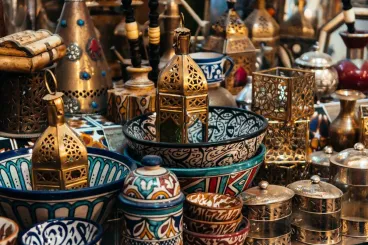
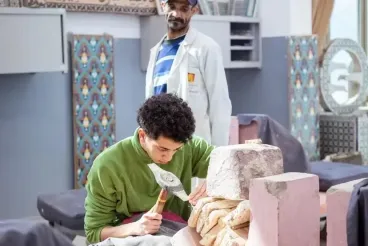
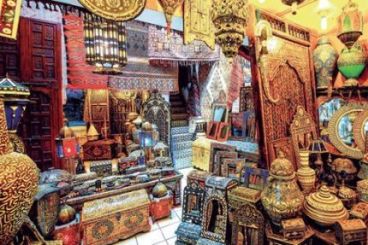
In the heart of Marrakech, Abdelouadoud Manhir, a civil engineering graduate, defies traditional career paths by immersing himself in the ancient art of zellige, blending education with craftsmanship to breathe new life into this fading heritage. His journey, marked by innovation and a deep respect for tradition, challenges stereotypes and highlights the vital role of education in preserving and evolving Morocco's artisanal legacy.
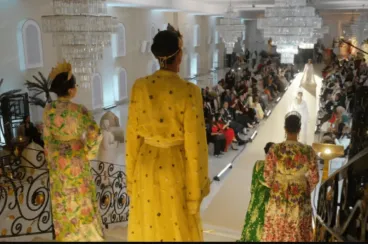
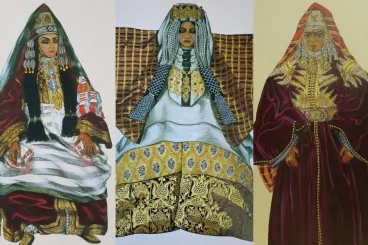
Once a staple of urban attire, the Moroccan caftan is now worn on all special occasions. Recognizable by its long cut, intricate embroidery, refined fabric, and golden belt, this garment has evolved from the 11th and 12th centuries to the present day, earning its place on the high-fashion runway. Telling a story in motion, it has become a cherished fashion piece for religious celebrations, Ramadan evenings, or family gatherings.
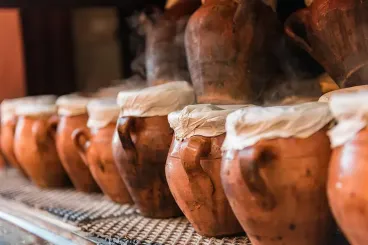
Tanjia, a slow-cooked meat dish from Marrakech, has long been tied to the city’s social and culinary traditions. Its historical significance is underscored by a 17th-century poem from scholar Abu Abdallah al-Marghiti, who described in detail how it should be prepared and cooked.
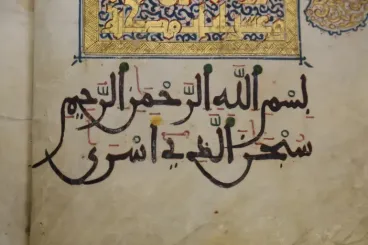
In 1344, Sultan Abu Al-Hasan Ali bin Othman gifted a beautifully handwritten and ornamented Qur’an, known as the Moroccan Raba’a, to Al-Aqsa Mosque, making it one of five sacred copies he dedicated to holy Islamic sites. Today, only 24 of its original 30 volumes survive, showcasing exquisite Moroccan calligraphy and geometric artistry rooted in spiritual symbolism.
 Les articles les plus...









 chargement...