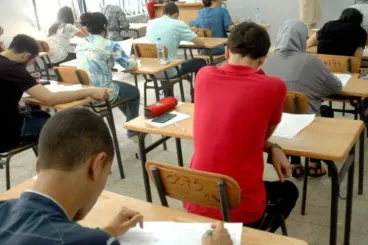
The growing and increasingly diverse use of artificial intelligence (AI) across multiple fields is reshaping how students’, and even researchers’, abilities are assessed, as some have begun systematically integrating these tools into their work. Mohssine Benzakour, a university lecturer in social psychology, explores the challenges raised by this phenomenon, particularly in the absence of teaching methods adapted to the AI era.
Moroccans continue to be the largest foreign-born community in Spain, with over 1.16 million residents, according to the latest data from Spain's National Institute of Statistics. Despite their significant presence, they face challenges in higher education access, ranking lowest among major foreign communities with only 9.3% holding higher education degrees.
In Morocco, the number of young people aged 15 to 29 who are neither employed, in school, nor in training (NEET) stands at 2.9 million. Among them, 72% are women and girls, according to a new report by the High Commission for Planning (HCP), in partnership with the ILO and the EU. Speaking to Yabiladi, sociologist Hakima Laala analyzes the complex process that leaves these individuals at the edge of despair.
 Les articles les plus...









 chargement...