


 chargement...


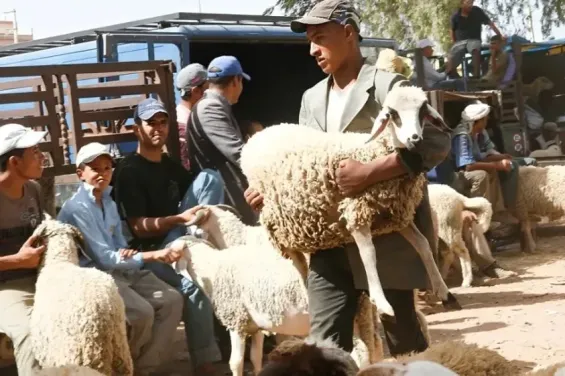
As Moroccans prepare for Eid al-Adha amid rising temperatures, specialists are urging extra precautions when transporting and keeping sheep in the days leading up to the holiday.
According to the General Directorate of Meteorology, temperatures are expected to remain high across several regions of the Kingdom, particularly inland areas of northern and central Morocco, the southeast, Souss, and the southern provinces. Conditions are only expected to start easing on Wednesday, the day of Eid.
The heatwave comes at a time when many families are purchasing sheep, transporting them home and keeping them for several days before the celebration, making proper care and ventilation particularly important.
During these hot conditions, «ventilation, water and space play a major role», says Mohamed, a livestock breeder from Tifelt. He explained that the main risks do not necessarily come from the heat itself, but rather from poor ventilation and improper handling of animals.
«Overcrowding remains one of the biggest concerns», he said, stressing that stables should be well ventilated and provide constant access to water. According to him, properly arranged shelters generally do not pose a major risk to livestock.
Transport and shelter precautions
Mohamed also warned that transportation conditions can quickly become dangerous during periods of high heat, especially when sheep are packed too tightly together.
«When transporting sheep, it is advisable to avoid the hottest hours of the day and travel either early in the morning or late in the afternoon», he said. «Even if transportation takes place during the day, animals should not be overcrowded. Sheep must remain standing, and if they are crammed together, they risk dying».
Once transported home, sheep should be kept in covered spaces and protected from direct sunlight, he added.
According to him, remaining still under the sun for long periods can be particularly exhausting for livestock during heatwaves. «Walking outdoors and grazing is not the same as remaining still under direct sunlight for long periods because wool can make the heat exhausting for them».
In addition to avoiding prolonged exposure to the sun, he insisted on the importance of hydration. There is no need to feed sheep excessively before the holiday, he said, stressing that water remains the priority.
According to Monem Rhoul, an agronomist engineer specializing in livestock and animal production, the heatwave should not pose a major risk to animals as long as they are kept in shelters or covered spaces. «In any case, sheep are accustomed to living under the sun, and their bodies can tolerate it», he reassured.
However, he stressed that the main concern begins after slaughter, particularly if the meat is left exposed to high temperatures. He advised against leaving carcasses under direct sunlight after slaughter. «It should always be kept in the shade and covered with a cloth», he concluded.





 Fil Info