


 chargement...


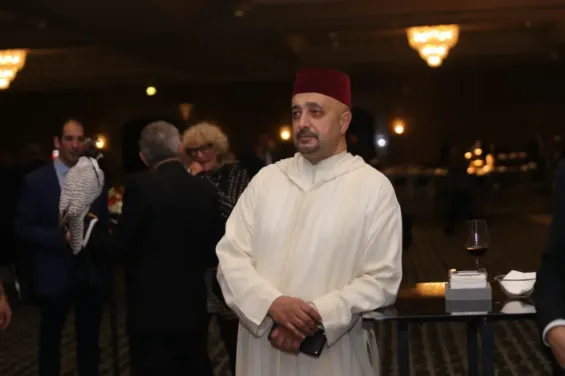
«What affects me most is seeing someone who has lost everything and still clings to hope,» Lahcen Boumakhtaf often says, reflecting on the dozens of stories that have left a lasting mark on him. Over the years, he has met young people and families who arrived in Spain carrying big dreams. He stood by them, sometimes as a translator, other times as an advocate for their rights.
But long before becoming a voice for migrants, he was one himself.
More than 30 years ago, the young man from the Moroccan city of Kenitra left for Italy. At the time, he had no plans of working in civil society or defending migrants’ rights. His stay coincided with a large-scale regularization process that allowed many migrants to obtain legal residency, and he was among those who benefited. Yet rather than settling permanently, he chose to return to Morocco to complete his studies.
Lahcen initially enrolled in law school before realizing his true interests lay elsewhere. Drawn to the world of tourism and hospitality, he joined a hotel management institute in Fez, where the foundations of his future career began to take shape.

In 1992, he finished second in a national competition, earning a six-month professional training opportunity in Germany. Looking back, he describes the experience as a turning point in his life.
From listening to hardship to defending rights
Lahcen continued moving between several European capitals, driven by a passion for travel and a curiosity about different cultures. In 1999, a new opportunity arose when the director of the hotel school in Fez contacted him with a job offer in Venice. He was invited to join the crew of one of the world's most luxurious cruise ships.
«I did not hesitate for a second,» he recalls.
From the decks of those ships, the world unfolded before him. New cities, languages and cultures crossed paths in a single space. Over the course of a year and a half, he visited numerous countries and gained valuable experience working with people from a wide range of backgrounds.
Spain entered his life almost by chance. What began as a short visit to see his brother eventually turned into a permanent stay. There, he found what he had been searching for: diverse landscapes, professional opportunities and a society open to pluralism. He quickly secured legal residency and an employment contract, and began working at a hotel reception desk.

Yet work was only part of the story. The rest began when his shifts ended.
«Members of the Moroccan community started coming to me for help. One person needed a document translated, another had been denied their rights, and a third did not know how to deal with the administration. At first, I helped them out of solidarity, before realizing that what they were facing was far bigger than passing, day-to-day problems.»
As the requests multiplied, he realized that individual assistance was no longer enough. More migrants were turning to him, and their situations were becoming increasingly complex. The idea of creating a structured framework to support migrants and defend their rights gradually took shape.
That vision led to the creation of the Antersan association in 2011. Over time, it became a symbol of his commitment to migrants, unaccompanied minors and Moroccan families living abroad. He also worked as a cultural mediator in hospitals and emergency departments, helping Moroccan patients communicate with healthcare institutions and ensuring they could access the care and treatment to which they were entitled.
.jpg)
As the years passed, his activism expanded beyond social work. He became involved in what he describes as «parallel diplomacy», convinced that defending one's homeland is not solely the responsibility of official institutions, but also of members of the Moroccan diaspora. He participated in international meetings, conferences and seminars, advocating for Morocco’s image and national causes while building bridges between Moroccan communities and political, human rights and media actors across Europe.
Moroccan talent: a wealth still seeking influence
The path, however, was not always smooth. As his activities grew, so did the opposition he encountered. His advocacy for Morocco’s national causes in Europe exposed him to harassment, provocation and threats from separatist groups and certain far-right circles.
Today, he speaks with particular frustration about some of the practices he has witnessed within the non-profit sector. More than anything else, he is angered by organizations that, in his view, have turned migrants’ suffering into a source of profit.
«During this period of regularizing migrants’ status, painful practices emerged that are unworthy of the mission of humanitarian work. Some parties began charging migrants money in exchange for documents proving their vulnerable situation, under various labels.»
Lahcen also champions another cause he considers equally important: ensuring that the success of Moroccans abroad does not remain an individual achievement, but becomes a collective force capable of benefiting both the community and Morocco itself.
«I believe that the presence of Moroccan talent in Europe, despite the important individual successes achieved, has not yet reached a level that matches the real potential of Moroccans living abroad,» he says.
It was this conviction that inspired the creation of the University of Moroccan Competencies Abroad, a platform designed to bring together Moroccan expertise from around the world. Today, he serves as the coordinator for the Catalonia region.

Despite all the journeys, experiences and battles that have shaped his life, his tone softens whenever he speaks about Morocco. The language of rights, politics and activism gives way to memories of the call to prayer, the smell of freshly baked bread, a glass of mint tea and family gatherings.
With a touch of nostalgia, he concludes:
«I sometimes think about returning to Morocco for good — not because life abroad has not given me beautiful things, but because home remains the place where a person feels they belong without needing to explain themselves. But returning is not only an emotional decision, and that makes it more complicated than it may seem.»





 Fil Info