


 chargement...


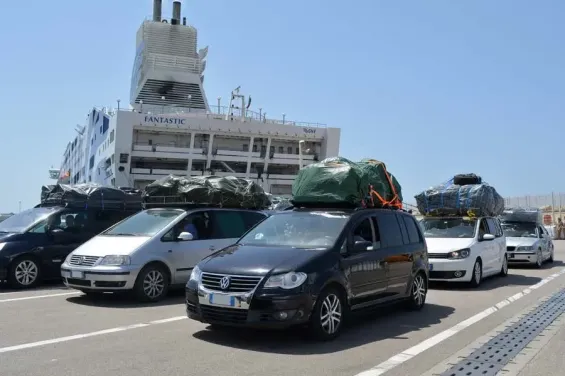
With Operation Marhaba 2026 underway since June 10, growing numbers of Moroccans living abroad are making their annual journey home. Yet for many families, this summer ritual is becoming increasingly difficult to afford. The issue resurfaces every year and was once again raised this week in Morocco's House of Councillors.
Currently in Morocco for the summer, Salem Fkire, founding president of the Cap Sud MRE association, believes that while national carriers remain the most practical option for many members of the diaspora, ticket prices have become a major obstacle.
«The schedules and destinations offered by a national airline such as Royal Air Maroc best meet the needs of Moroccans living abroad, but prices remain prohibitive for many families», he told Yabiladi. «To travel to Morocco during the summer, a family often has to budget between €1,500 and €2,000 for a round trip. At nearly €600 per person, it is becoming increasingly difficult to afford».
While booking well in advance can help reduce costs, Fkire notes that this is not a realistic option for everyone.
«Planning holidays a year ahead certainly lowers the bill, but today's economic climate doesn't always allow for that», he said. «Many families have just returned from vacation and are dealing with local taxes, property taxes and other expenses in their countries of residence. Some end up taking out loans or using credit simply to finance their summer holidays».
Some families are giving up on the trip
For Houda Elhakak, a former president of the Franco-Moroccan Friendship Association, the rising cost of travel has led to a difficult decision: she will not be spending her summer holidays in Morocco this year.
A mother of three, she explained that a trip home has simply become too expensive for her family. «For a household of five, with two parents working as teachers and children aged between 14 and 20, it has become impossible», she said.
Unlike many travelers, Houda and her husband cannot avoid the peak season because of their profession. «Even when we try to plan ahead, we can only travel during the school holidays, when prices are at their highest», she said. «With the overall rise in the cost of living, we now focus on finding the most affordable option rather than prioritizing a particular destination».
The couple will still travel to Morocco in October for a family wedding, although even that trip is proving costly. «Because it coincides with school holidays, prices are already twice as high», she noted.
Instead of spending the summer in Morocco, the family has chosen another destination and plans to combine the trip with a visit to her father. According to Elhakak, the decision has reduced the family's holiday budget by nearly two-thirds.
The experience has inspired her to revive the association she once chaired. «The goal would be to help organize holidays in Morocco for low-income families, so that financial constraints do not prevent them from maintaining their ties with the country and its culture», she said.
Balancing travel costs and ties to Morocco
For Salem Fkire, the solution lies in making travel more affordable, particularly through national carriers.
«Morocco is a tourism-oriented country, and tourism is one of its main sources of foreign currency. That should make it possible to offer lower fares», he argued. «If tickets were more affordable, Moroccans abroad would travel home more often than once or twice a year. Some could make four or five trips annually».
According to him, any loss in airline revenue would be offset by increased spending inside Morocco and greater foreign-currency inflows. «Instead of families giving up on holidays or choosing other destinations where tickets are cheaper, they would come home more often. That is what would help second-, third- and fourth-generation Moroccans develop the habit of returning regularly».
Fkire believes frequent visits are essential to preserving long-term ties between the diaspora and Morocco.
«The bond with the country is being weakened for economic reasons», he said. «National carriers have a social responsibility toward Moroccans living abroad, not just a commercial one».
He also pointed to what he sees as a growing convergence between low-cost airlines and traditional carriers. «In air transport, low-cost airlines are increasingly moving toward pricing levels similar to those of national carriers, for reasons of competitiveness that do not always reflect the realities of the Moroccan diaspora», he said.
With nearly six million Moroccans living abroad and contributing around 9% of Morocco's GDP, Fkire argues that transport policy should take their specific circumstances into account.
«The economic logic cannot be the same as in countries that do not have such a large diaspora», he concluded.




 Fil Info