


 chargement...


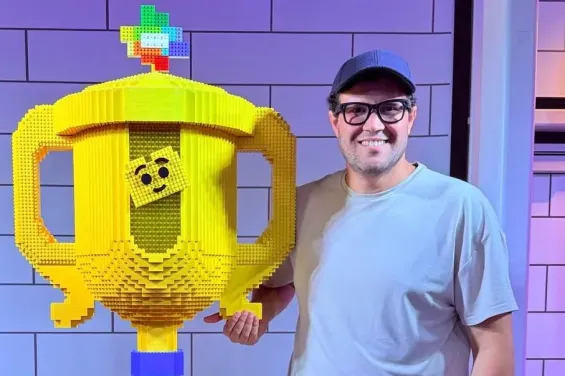
With a growing following on social media, Abdallah El Marhoune is showing how a simple bike ride with his two-year-old son can become a meaningful learning experience while creating lasting memories. Born to a Palestinian mother and a Moroccan father, the child is growing up in Denmark, navigating a multicultural environment shaped by Amazigh, Arab, French, English and Danish languages and traditions within a safe and nurturing setting.
That philosophy lies at the heart of the videos El Marhoune shares online. For him, the project is no coincidence. Before launching his own studio dedicated to helping young people discover and develop their talents, he worked with Lego Education. «What I post is only a small part of the activities I do with my son throughout the day», he told Yabiladi.

Applying play-based learning to child development
Alongside a professional career that began as an electrical engineer in northern Morocco, El Marhoune gradually developed an interest in educational methods centered on play. The son of a school principal, he was recruited by Lego Education when the Danish company was expanding its regional operations in Dubai. That opportunity marked the beginning of an international career that later led him to work with the UAE Ministry of Education on curriculum development and educational strategies.
In 2024, he returned to Denmark to provide what he felt was a more suitable environment for his son.
«For the past ten years, I have worked exclusively with children, particularly gifted children, using Lego-based learning. With Lego Education, we developed curricula and training programs for students and teachers and led workshops in several countries. The birth of my son opened my eyes to the human dimension of practices that had previously been purely professional», he explained.
For El Marhoune, his son's upbringing is a natural extension of those educational convictions.
«What I try to show in my videos is that parents' presence is essential throughout a child's day, especially in the early years, when they are building their understanding of space, time and relationships with others», he said.

«You have to be emotionally present, engage consciously with children and know how to recognize their feelings. This approach can be playful while still serving educational goals. That is the message I want to share with my audience».
Through his website, he also hopes to provide parents with practical resources, activities and educational content they can use in their daily lives.
«It is not about raising a child who succeeds at any cost, but a happy, fulfilled child who is confident, curious and secure in who he is; a child who asks questions and has the tools to become independent and choose his own path», he said.
According to El Marhoune, people are less interested in being told how to parent than in seeing real-life examples of healthy parent-child dynamics in action.

Combining education with emotional presence
Determined to put his educational beliefs into practice, El Marhoune began documenting some of the moments he shares with his son.
«Otherwise, I would have been an impostor. Someone who claims to be an educator cannot keep his convictions confined to theory», he said.
«From the beginning, I knew what kind of father I wanted to be: one who turns everyday moments into opportunities to build his child's confidence, curiosity and creativity. These are essential skills for a 21st-century child, especially one growing up with a multicultural identity».
For him, every learning experience should become a journey of discovery rather than a series of instructions.
«That is what allows children to explore on their own, make mistakes, improve and learn how to find solutions», he explained.
The response online continues to grow.

«A Palestinian parent who is now a refugee in Spain contacted me to ask about the equipment I use on bike rides with my son because he wanted to do the same with his daughter. Others have reached out as well, and I think that says a lot about the different ways people view parenthood», he said.
«In our societies, fathers are often seen primarily as providers and authority figures. What I am trying to show is that emotional presence is central to a child's development and that both parents have a role to play in nurturing it».
For El Marhoune, these everyday moments do more than strengthen family bonds. They also help shape a child's identity, sense of belonging and confidence in the world around them.





 Fil Info