


 chargement...


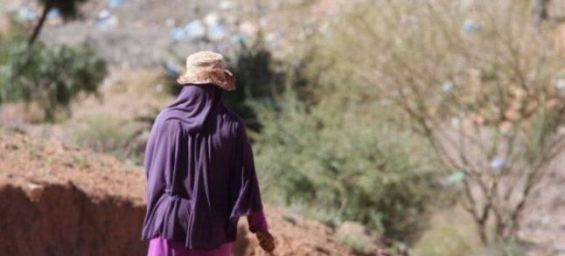
Contrary to demographic and socio-economic transitions in rural areas, the status of women in these regions remains below the national average, particularly regarding education, empowerment, and recognition of their contributions to the economy. Unveiled Tuesday during a conference-debate on «Empowering Women in Morocco: Understanding the Challenges for Better Action», a study by the High Commission for Planning (HCP) indicates that better integration of female participation in rural areas could have contributed nearly 2.2% to GDP in 2019.
Focusing on the «estimation of the economic opportunity costs of the economic empowerment of rural women», this study, conducted in partnership with UN Women, notes that the 2.2% encompasses two dimensions. In fact, 1.2% «is attributed to unpaid female employment, highlighting the often invisible but essential work that rural women provide in agricultural operations and small family businesses». Additionally, 1% «corresponds to the potential income loss of active women, underscoring the persistent barriers that hinder their full participation in the labor market», states the HCP.
According to the same source, the quest for better socio-economic conditions is driving more women to leave rural areas, without resolving the structural challenges of female underemployment. The female population in rural areas is estimated at 6.7 million in 2024, representing 49% of rural inhabitants, with significant human potential. Indeed, 57.2% of them are of working age (15-59 years), 29% are under 15 years old, and 13.9% are 60 years or older, while agriculture remains the main sector of activity.
The vulnerability of this potential begins with the still limited access to health and education. In 2024, 48.4% of rural women are unable to read or write, compared to 27.9% of men. Nevertheless, female employment indicators are «relatively better in rural areas than in urban areas», at 21.9%, which is double the urban rate (13.7%). However, underemployment of rural workers remains a significant challenge.
More than 70% of Active Rural Women Are Not Paid
An analysis of the nature and quality of employment shows that 60.3% of active rural women are family helpers, with work that is «generally unpaid». In this regard, the study notes that 70.5% of active women in rural areas «receive no financial compensation», further illustrating the opportunity cost in this area. HCP thus recommends concrete actions «urgently», especially since Morocco aims to «create quality jobs in all territories, including rural areas» to achieve a female activity rate of 45% by 2035, according to the New Development Model.
 Source: HCP
In this context, the HCP points to the weight of «negative attitudes towards female employment», especially in rural areas, «despite widespread support for gender equality in various fields, illustrating a desire to move towards a more egalitarian society». According to the institution, these perceptions «seem to explain the weight of NEETs among young rural women aged 15 to 29, with a rate of 61.8%, mostly being housewives (95%)».
Similarly, the study explains that nearly 91% of women «potentially able to enter the labor market reside in households headed by a man, while only 9% live in households led by women». The HCP highlights that this distribution illustrates a dynamic in which men «are often the main income providers within households», whereas women are more associated with domestic and family responsibilities.
This disparity has profound implications «on women's financial autonomy and their ability to fully access economic opportunities», the study further asserts. It emphasizes the need for changes to «promote gender equality and women's economic empowerment» by highlighting «the economic and social relevance of this active participation in the labor market».
Obstacles Persist, Even with Access to Employment
Even when accessing the labor market, women still face major difficulties in finding employment, which, according to the HCP, explains the increase in the female unemployment rate. Indeed, it rose from 13.5% in 2019 to 16.2% in 2020 «due to the impacts of the pandemic and adverse weather conditions». The study mentions a trend affecting «both rural and urban areas, with respective unemployment rates of 3.9% and 24.7%».
In economic terms, women who could join the labor market but do not, for various reasons, represent «an estimated loss of 11.2 billion dirhams», which could have increased the nominal GDP of 2019. This highlights the importance of «addressing the structural and socio-economic barriers that limit rural women's access to paid employment opportunities», the HCP insists.
 Source: HCP
Analyzed by educational level, this loss highlights «significant gaps», reaching «16,400 dirhams for rural women without schooling, to 18,300 for those with primary or middle school education, and 30,900 dirhams for their higher-educated counterparts». This figure reflects the dimension of human capital at stake, prompting the study to advocate for improved infrastructure and basic services to establish a more solid foundation for empowerment.
Among its other recommendations, HCP advises improving employment opportunities and activity creation, strengthening education and vocational training conditions, reducing barriers related to low wages and job insecurity, improving the legal and financial environment, facilitating access to childcare services, as well as empowering rural women to support the emergence of a «rural middle class».





 Fil Info