


 chargement...


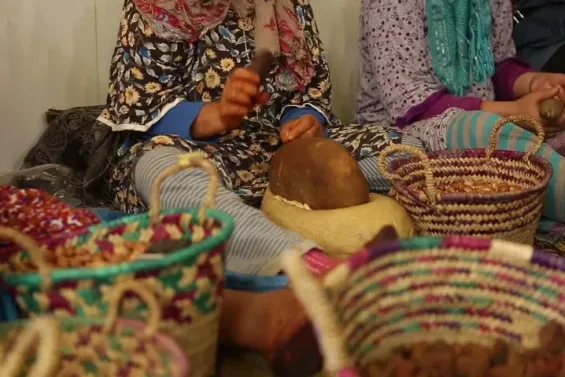
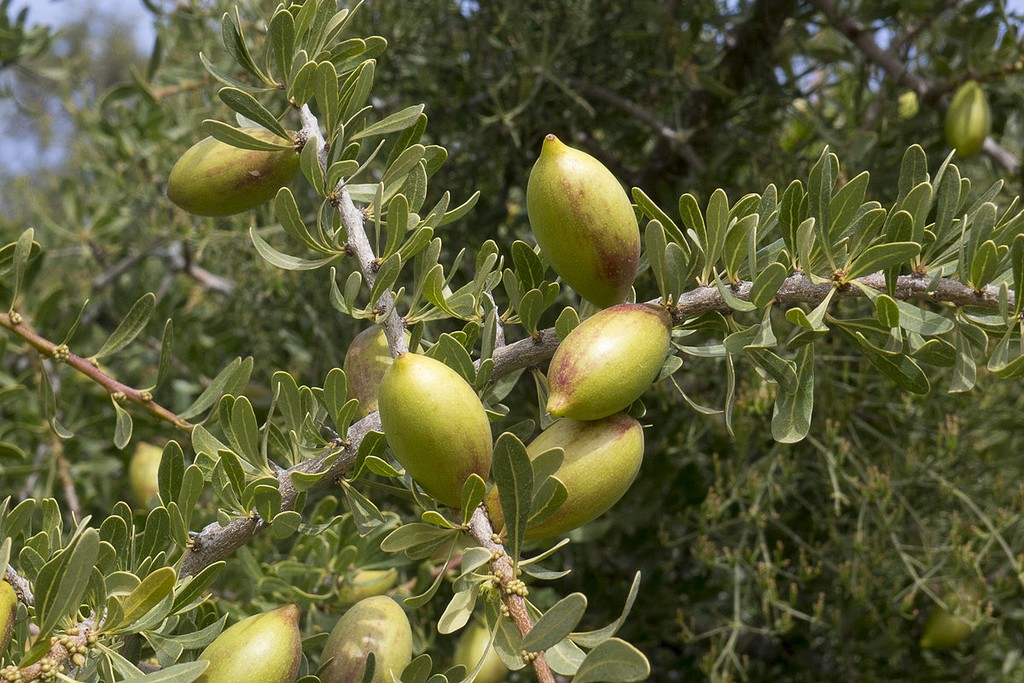
An endemic tree in Morocco, the argan has thrived for millennia, particularly in rural areas stretching from Essaouira to Sidi Ifni, passing through Agadir and Taroudant. Over the centuries, its uses have multiplied, beginning with oil extraction. Beyond its renowned culinary and cosmetic purposes, this «liquid gold» holds deep cultural value for local communities. In Amazigh tradition, the tree symbolizes the sanctity of nature, longevity, resilience against the arid climate, and the enduring bond between people and their environment.
The Argania spinosa grows within a UNESCO-recognized biosphere reserve, reaching up to seven meters in height and living for more than 250 years. To celebrate its ecological and cultural importance, a World Argan Day is now marked annually on May 10.
A pillar of agroforestry thanks to its drought resistance, the argan tree underpins the way of life for local populations. Its abundance has given rise to more than thirty products, ranging from food and livestock feed to cosmetics, trade goods, and even materials for architecture and craftsmanship.
Argan Oil: The Essence of a Civilization
The argan forest serves three vital roles. Ecologically, it shields against desertification and soil erosion. Economically, it provides wood, fodder, and a source of trade. Socially, it sustains livelihoods and creates jobs while respecting nature.
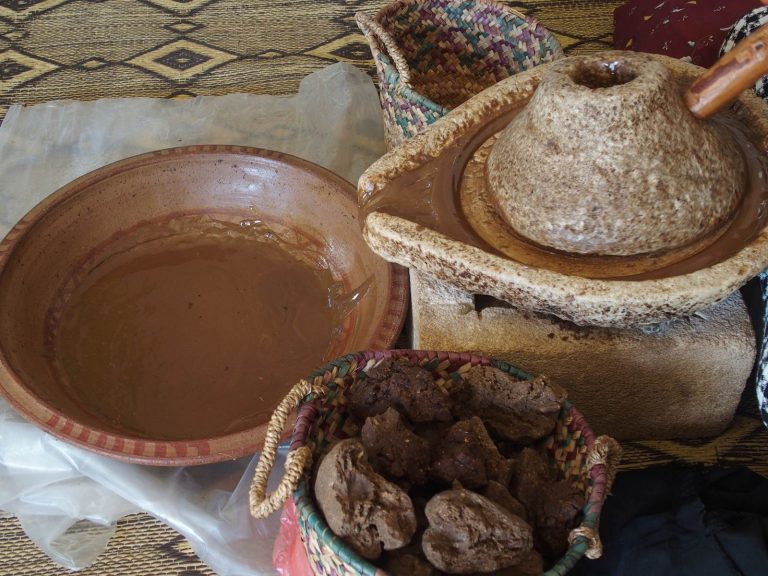
Nothing from the tree is wasted: the fruit yields oil; shells are used as fuel; and press cakes feed livestock. The oil’s extraction, an ancient, mostly manual skill, serves culinary, cosmetic, and traditional medicinal purposes. Using basic wooden and stone tools, women in argan-growing areas have preserved this craft for generations.
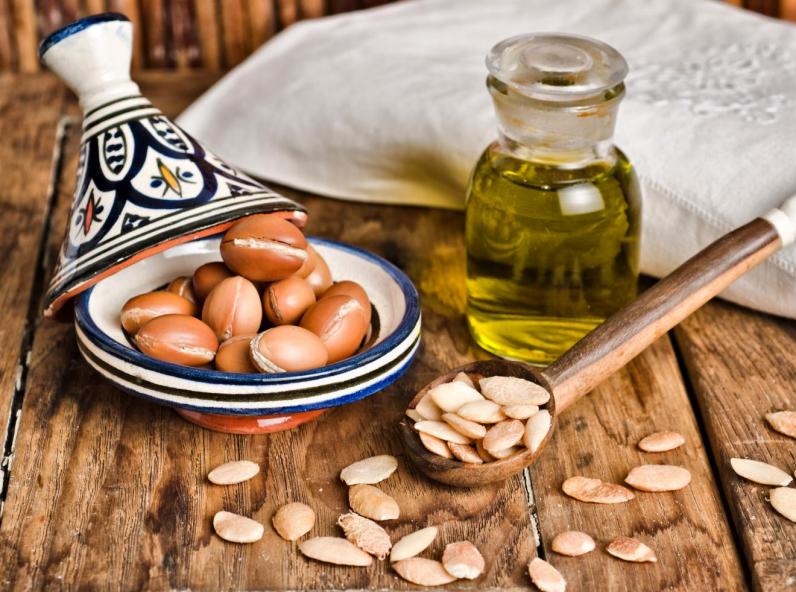
The process begins with harvesting ripe fruit, followed by rooftop drying. The skin is separated from the nut, the seed extracted, roasted, and ground. Finally, the paste is pressed by hand to release the oil, which is stored like a treasured household staple. On Amazigh tables, especially during Yennayer (the Amazigh New Year) or celebrations such as births, argan oil is essential in dishes like tagoula, amlou, tagines, and breads.
This method, rooted in ancient agricultural traditions, shares similarities with age-old olive oil production, which dates back over 8,000 years in the Orient and Mesopotamia.
Documented Uses Through History
While the use of argan oil has been deeply embedded in local culture and social life for millennia, written historical accounts are comparatively recent. References to the argan tree appear as early as the 12th and 13th centuries. Among them are the writings of Andalusian physician and botanist Ibn Al-Baytar, who described «a fruit resembling a small yellow acorn», similar «internally to a pine seed». He noted that «this fruit is warm and tightens the stomach. Its oil is beneficial against chronic deafness and ear ailments», in his work Collection of Simple Remedies and Foods, published shortly before his death in 1248.
In the 15th century, scholars also mentioned the argan tree in religious contexts, allowing almonds from the tree to be used in place of barley for the duty of zakat (almsgiving). In the 16th century, the traveler and diplomat Leo Africanus (Hassan al-Wazzan), born in Granada, recorded details of the tree in his Description of Africa (Descrittione dell’Africa, 1526). He described argan oil, its fruit, and its medicinal and culinary applications.
Leo Africanus also wrote about the Haha region near Essaouira, depicting it as «a very harsh region, full of high rocky mountains, forests, valleys, and small streams», where «a large number of thorny trees, producing a fruit as big as the olives we get from Spain», could be found.
From the 18th century into the early 19th century, during a period of European imperial ambitions, the natural riches of Morocco’s southern territories drew growing interest from European powers. The argan tree became particularly coveted, and some Western observers began advocating for the possibility of exporting argan products to Europe.
In 1801, the Danish consul in Tangier, Peter Kofoed Anker Schousboe, published a report detailing the local uses of the argan tree. He examined its geographical distribution, its significance for local communities, and the process of extracting its oil.
A few years later, Spanish explorer Domingo Badía y Leblich praised the multiple virtues of what he called a «precious tree», noting that it «multiplies on its own, without needing to be cultivated, so that there is nothing else to do but collect the fruit». He described it as «a kind of extremely large olive, from which abundant oil is extracted, good for all uses», and even speculated about the possibility of «acclimatizing it in the southern countries of Europe».
Even in the 20th century, after the end of the Protectorate (1912–1956), argan oil continued to attract considerable interest from abroad. With the rise of the cosmetics industry, international investors sought to capitalize on this highly valued resource.
In the regions where argan oil production has endured, women have increasingly organized themselves into cooperatives. These collectives not only generate local economic benefits but also safeguard an ancestral craft, preserving a heritage that reflects an entire way of life.





 Fil Info