


 chargement...


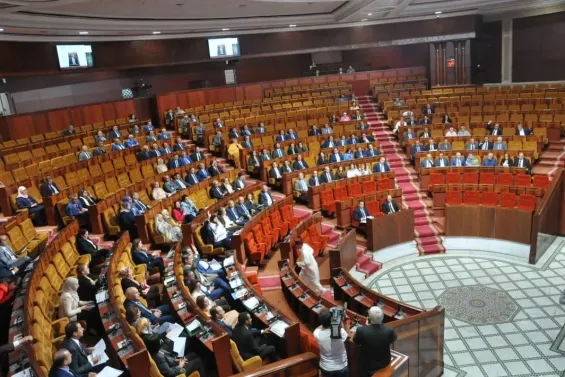
The parliamentary group of the Party of Progress and Socialism (PPS) in the House of Representatives has recently submitted a bill aimed at regulating the profession of psychologists. The proposed legislation covers multiple areas of practice, including clinical, social, educational, and occupational psychology, as well as neuropsychology, criminal psychology, and mental health. Comprising 24 articles, the bill notably proposes the creation of a National Order of Psychologists and sets out the eligibility criteria for practicing, along with the required training standards.
The text also outlines a number of regulatory measures to be defined at a later stage, in order to clarify certain provisions and principles set out in the bill. Among these is a transitional period of four years, during which practitioners already active before the law’s adoption would be allowed to regularize their status, subject to conditions to be specified by regulatory texts, potentially including additional training requirements.
The bill further establishes a clear distinction between the role of psychologists and that of medical doctors, particularly in relation to prescriptions. Introduced by PPS parliamentary group president Rachid Hammouni, the proposal highlights the role of psychologists in raising awareness about «the importance of mental health and mitigating the effects associated with mental disorders», as well as promoting «a culture of mental health rooted in prevention». However, when contacted by Yabiladi, the deputy did not respond to phone inquiries.
The initiative has notably received support from Fouad Yakoubi, founding president of the Moroccan Association of Researchers and Social Psychologists and vice secretary-general of the National Syndicate of Psychologists. It is worth noting that clinical psychologists are involved in the assessment, diagnosis, and management of psychological distress or mental disorders, whether in hospital or private settings, without issuing medical prescriptions, which remain the responsibility of psychiatrists. Social psychologists, for their part, are more focused on psychotherapy.
This is not the first attempt to regulate a profession rooted in the humanities, which operates within the health sector without being classified as paramedical.
A long-standing push for regulation
For over a decade, the Moroccan Society of Clinical Psychologists (SMPC), founded in 2000, has been advocating for legislation to address the lack of regulation and the resulting ambiguities in professional practice. These include overlaps between roles and specialties, as well as concerns related to ethics, equivalence, and training standards. An initial bill was proposed in 2015, later expanded to cover all psychology specialties following a benchmarking process based on international practices.
Since 2020, the SMPC has engaged with various government sectors and submitted a comprehensive proposal «after several consultations with academics from different psychology specialties and with the Moroccan Association of Practicing Psychologists, as part of open discussions with the Ministry of Health and Social Protection». The organization has called for «ethical and deontological standards aligned with internationally recognized principles governing psychological intervention, treatment, care, assessment, diagnosis, and scientific research».
It has also advocated for «harmonization between the legal framework governing the psychology profession and university training programs accredited by the competent ministry, particularly master’s degrees offered by Moroccan universities», in order to facilitate graduates’ integration into the labor market and strengthen links between academia and the socio-economic environment.
In this regard, the SMPC welcomed a bill introduced in January 2024 by Touria Azzaoui of the National Rally of Independents (RNI), while reiterating the need for «a comprehensive legal framework encompassing all psychology specialties, clearly defining their scope of practice, limits, and conditions of exercise, within a collective and inclusive approach».
Within the government, Minister of Health and Social Protection Amine Tehraoui addressed the issue in Parliament in October 2025, stressing the importance of regulation to structure the profession and address the shortage of human resources. According to him, Morocco has only 1.7 psychiatrists per 100,000 inhabitants, well below World Health Organization standards.
A national roadmap for mental health is expected to be finalized by 2030, including a regulatory framework for psychologists. The question remains as to which version of the proposed legislation will ultimately shape these provisions.





 Fil Info