


 chargement...


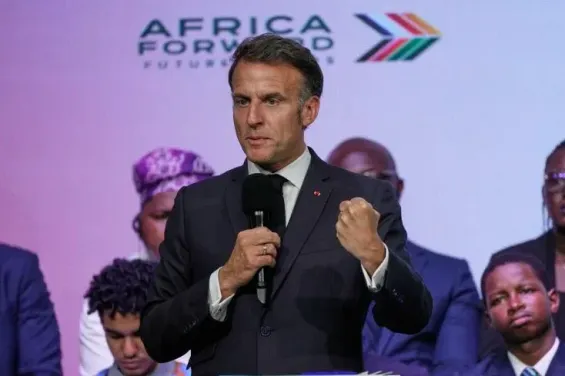
As the French government continues to firmly defend higher tuition fees for non-EU students at public universities, President Emmanuel Macron has voiced his support for the measure, which could multiply tuition costs for some students by sixteen.
Under the proposed reform, undergraduate tuition fees could rise from 178 euros to 2,895 euros per year, while master’s degree fees could increase from 254 euros to 3,941 euros. Speaking to France 24 on the sidelines of the Africa Forward Summit held on May 12 in Nairobi, Kenya, Macron defended the move as a way to reduce the burden on French taxpayers.
The French president backed the government’s plan to ensure that «French taxpayers do not pay so that higher education is free for the entire planet». However, he stressed that France would «continue to support talented people» from various African countries, particularly students selected directly by universities, which would retain the option of exempting them from tuition fees.
«Campus France can provide support, and we will continue to have a highly attractive policy», Macron said in response to a question on the issue.
A «country-by-country» approach for African students
The increase is expected to affect around 90% of non-EU students enrolled in French public universities. To defend the reform, Macron argued that studying in France remains relatively affordable compared with other European countries, particularly the United Kingdom and Germany.
«During my first term, we even made studies free, and French students no longer pay social security contributions. That is also true for EU students and, today, for non-EU students. An African student at an English, German or Italian university pays much more than in France», he said.
«We are allowing universities to charge non-EU students, and that is normal, because the collective choice we make in France is that if a student does not pay, the taxpayer does. But French taxpayers never said: I will pay for the studies of every student in the world, wherever they come from», Macron added.
The French president also compared the situation to countries such as Canada, the United States, and China, arguing that France remains «one of the only countries in the world where university is free».
«For African students, it will be country by country; universities will make their own choices», he said.
Slight easing of exemption rules
Macron noted that «some universities may charge [students] more than today, which is zero», while insisting that fees would still remain lower than in many other European countries.
«Alongside that, we still have a scholarship system through Campus France and our universities», he added, arguing that France would remain «one of the least expensive countries in the world» for higher education even after the reform.
Macron’s remarks come as the proposed reform continues to spark tensions across French universities. They were made as student unions called for nationwide mobilization on Tuesday, May 12.
Meanwhile, the government announced a partial softening of the proposal through a new system of differentiated fees. According to Agence France-Presse, the decision followed consultations with stakeholders in the higher education sector, particularly the organization France Universités.
French Higher Education Minister Philippe Baptiste said he wanted to amend the decree to allow «greater flexibility» in its implementation and make the system easier to apply.
Under the revised proposal, universities would be allowed to exempt up to 20% of non-EU students from tuition fees, compared with the 10% initially planned. The question now is whether that margin will be sufficient to limit the financial impact on the many students affected by the reform.





 Fil Info